
Crown, cap and flashing repair in Hunterdon County, NJ
Water finds the first crack in a crown, the first gap in a flashing seal, or the first rusted-through cap, and it does not stop until the flue tile and the brick behind it are wet all winter. We repair crowns, caps, flashing, liners and mortar joints for homes across Readington and Hunterdon County: the kind of repair that keeps a small leak from turning into a rebuild.
The straight answer
A stain on the ceiling near the chimney, rust on the damper, or white streaks down the brick all mean the same thing: water is already inside the chimney system. In Readington itself, 1,281 households heat with fuel oil and another 297 with bottled or tank LP gas, roughly one in four homes running a flue that no utility company ever checks. Nobody is watching that chimney but you, and, once you call, us.
The crown is the roof of the chimney, and it fails first
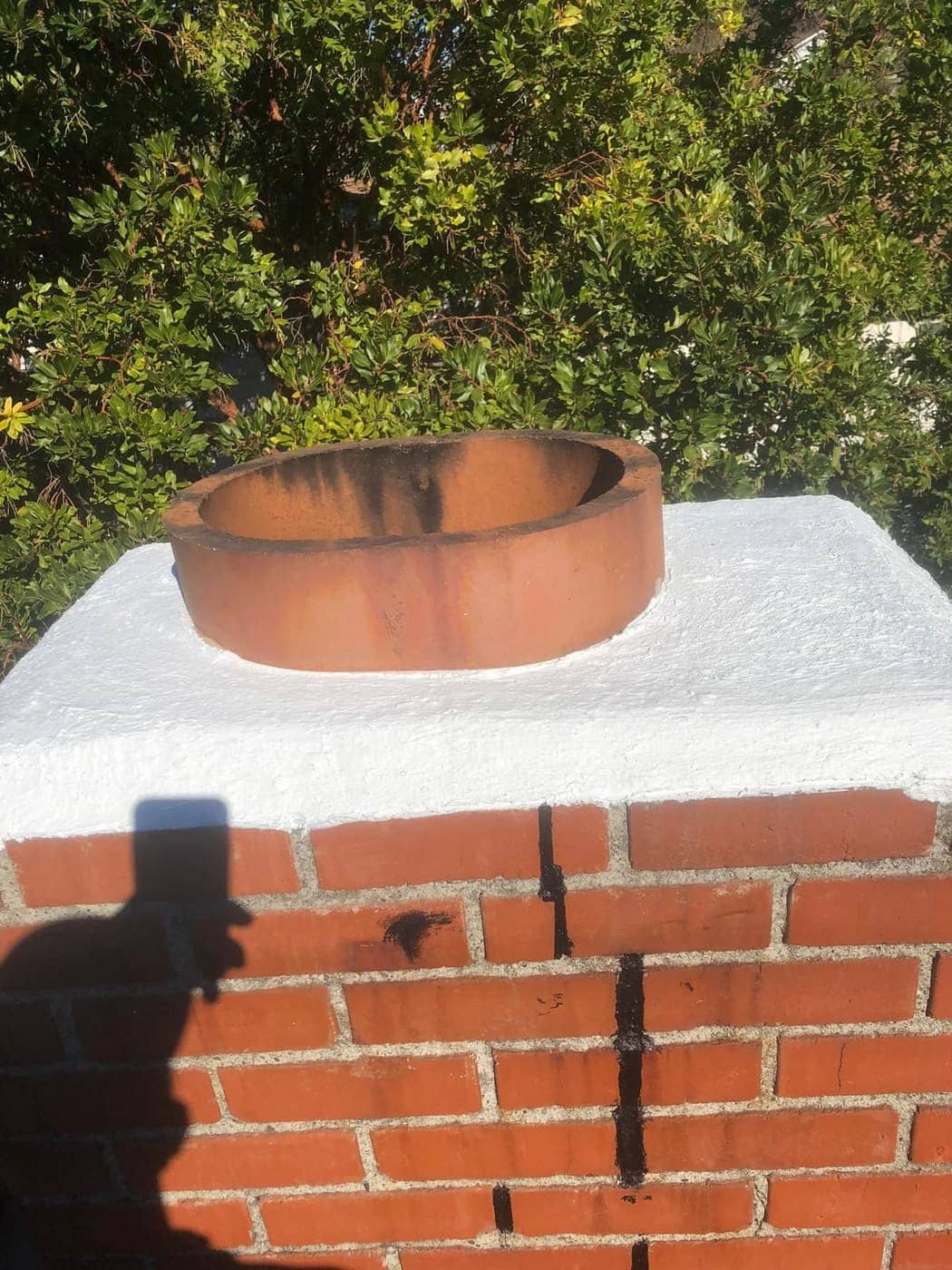
A chimney crown is the concrete or mortar cap poured over the top of the masonry stack, sloped so rain runs off instead of soaking in. It takes the worst of the weather with nothing above it. Once it cracks, water stops running off and tracks straight down through the crack, along the flue tile, into the brick joints below. A hairline crack from the ground is often a network of them once we’re standing next to it.
- Hairline cracks that widen every winter as trapped water freezes and expands
- Spalling: the surface flaking off in chips where water has gotten behind it
- A crown poured flat instead of sloped, wrong from day one
- Gaps where the crown meets the flue tile, the most common entry point
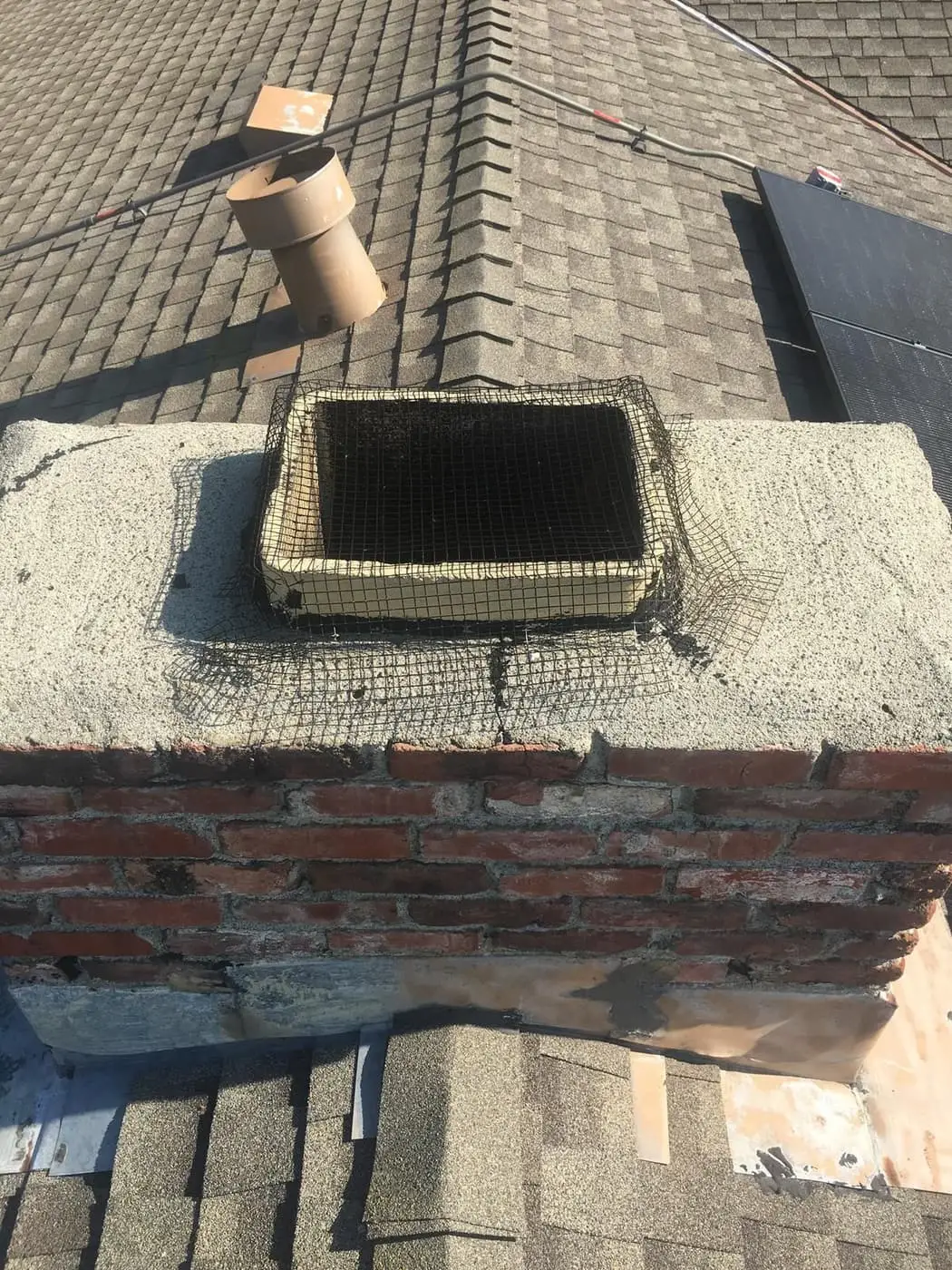
A cracked crown is not cosmetic. It is the one place on the whole chimney where every drop of rain has a straight line down to the flue tile.
Hunterdon crosses freezing more than the counties east of it
Freeze-thaw is the mechanism behind nearly every crown crack and open mortar joint we find: water sits in a crack, freezes, expands, and the crack widens, then it thaws and waits for the next cold night to do it again. NOAA’s climate normals put the Flemington station nearest Readington at roughly 103 of those freeze-thaw crossings a year, against about 65 in Newark and 64 in Philadelphia (the two metro areas most residents here commute to). That’s close to 60% more cycling than the same masonry gets near the coast, and a large part of why it fails here on a shorter timeline.
What a full repair covers
Not every chimney needs the same fix, and a lot of the work is figuring out which of these a given chimney needs before we touch anything.
- Crown repair or a full rebuild, sloped and sealed correctly
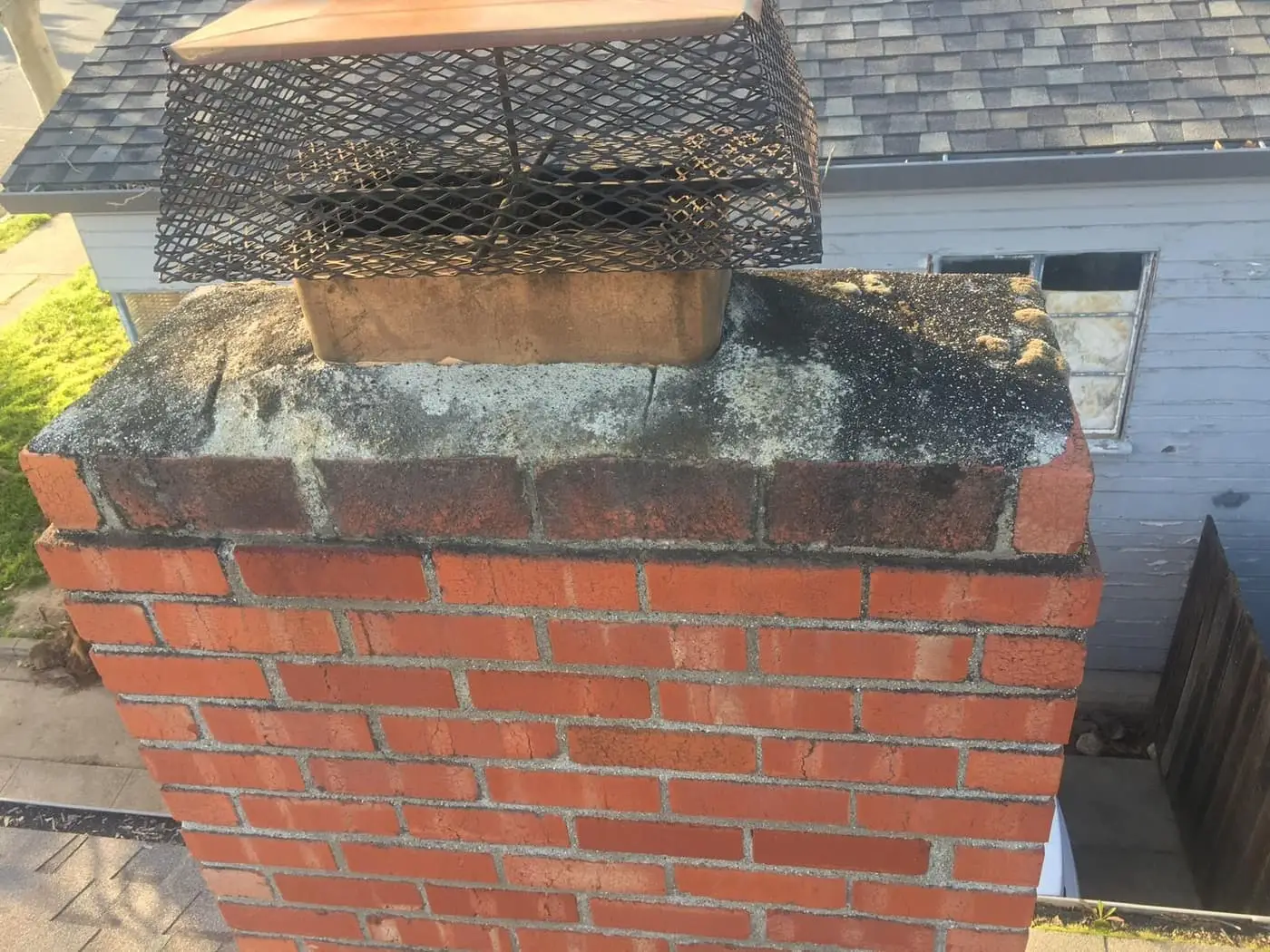
- Cap replacement: the mesh and metal top that keeps rain and animals out
- Flashing reseal where the chimney meets the roof deck
- Repointing: replacing failed mortar joints brick by brick
- Liner repair where the flue tile itself has cracked
Signs it is time to call before spring
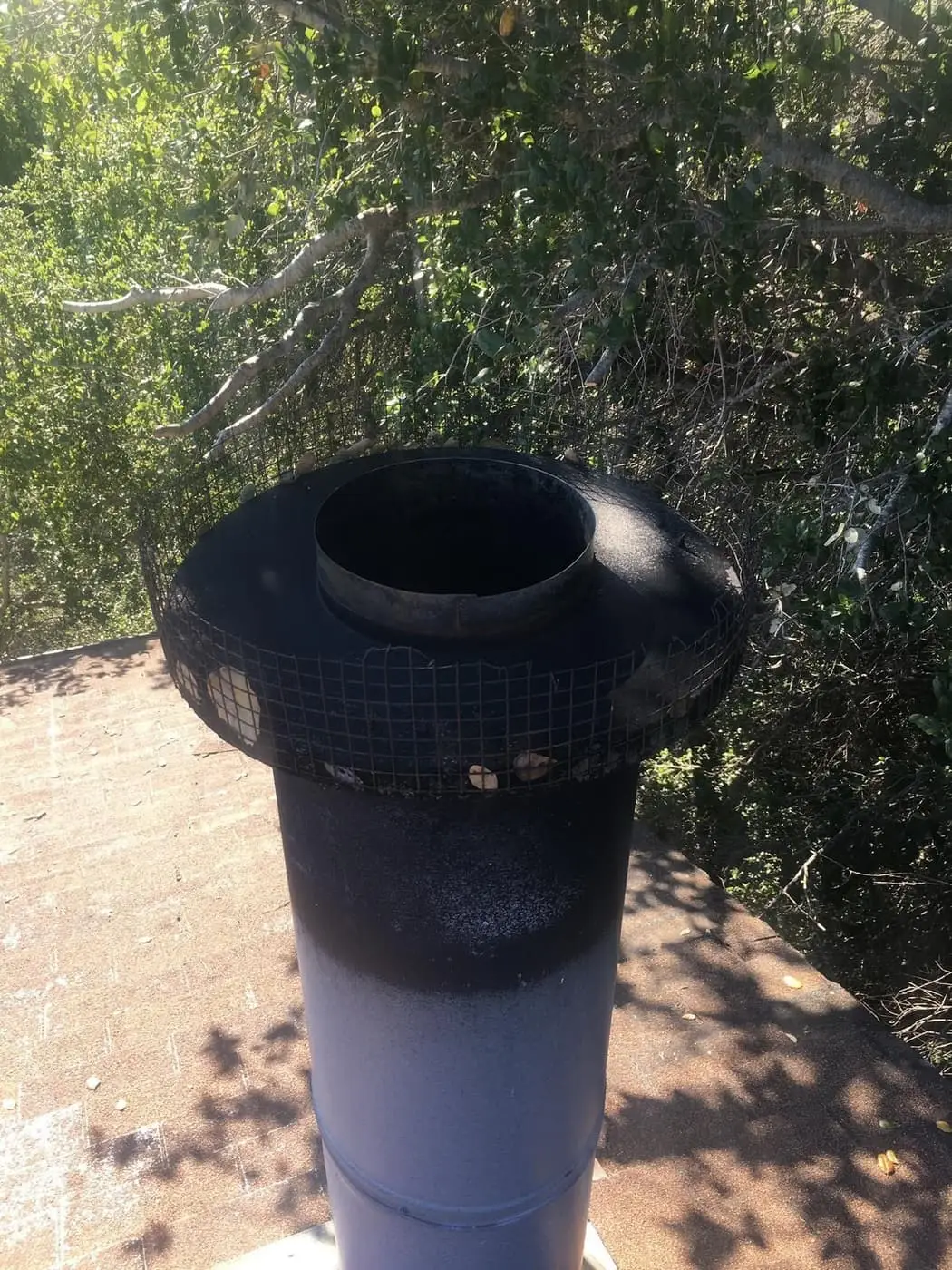
A ceiling stain near the chimney rarely points to the roof. It usually means the chimney, because a flashing or crown leak runs down inside the wall before it shows. Chalky white staining on the brick, efflorescence, means water is moving through the masonry, and a rusted damper that won’t close is often the first sign moisture has gotten past the cap. Hunterdon County has been under a federal storm or flood disaster declaration fourteen times since 1993. None of it gets better by waiting.
From our Google listing
Crowns, caps and flashing up close
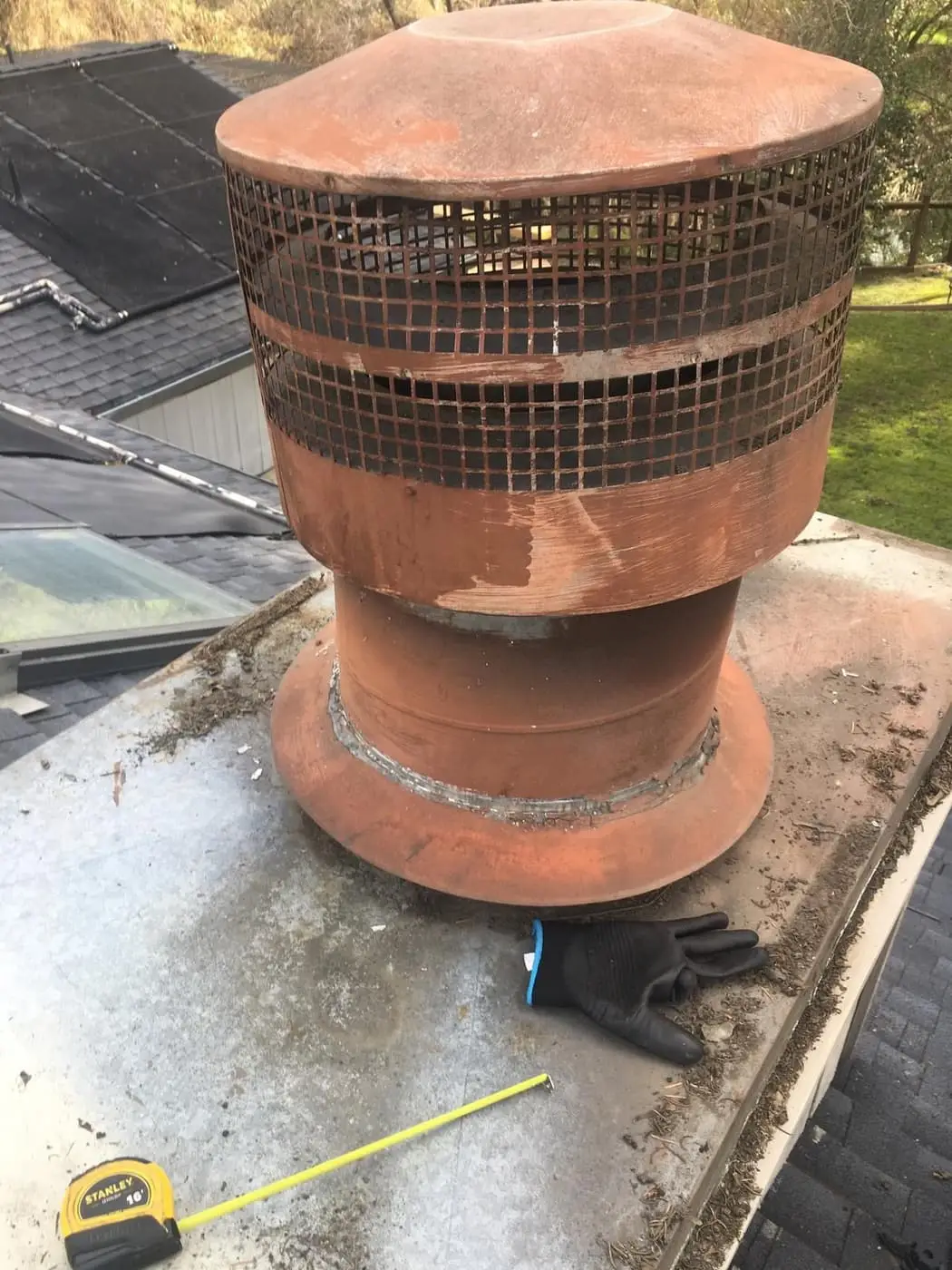
A round mesh-screened cap on a flat chimney top
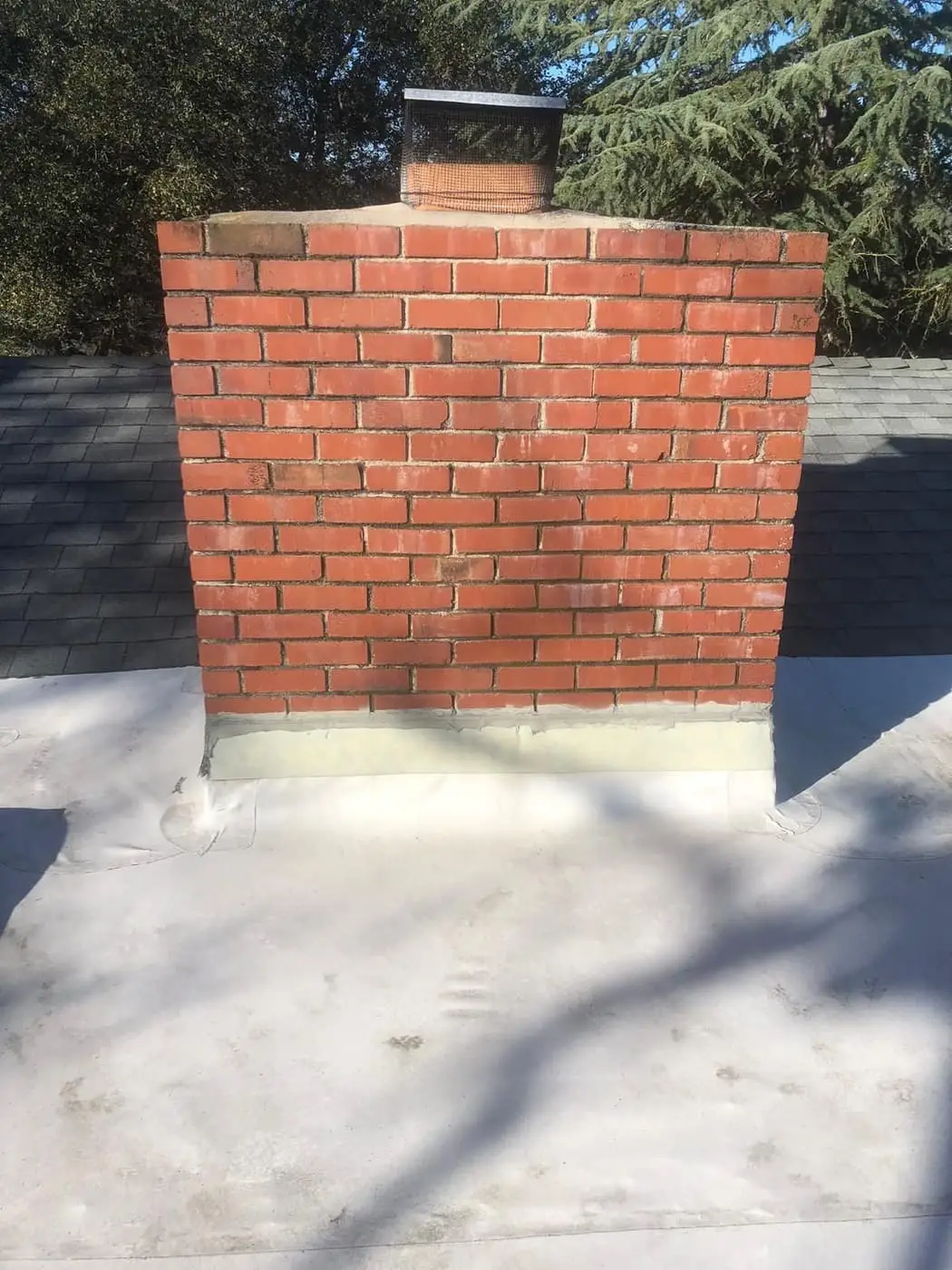
Metal flashing along the base of a brick chimney on a flat roof
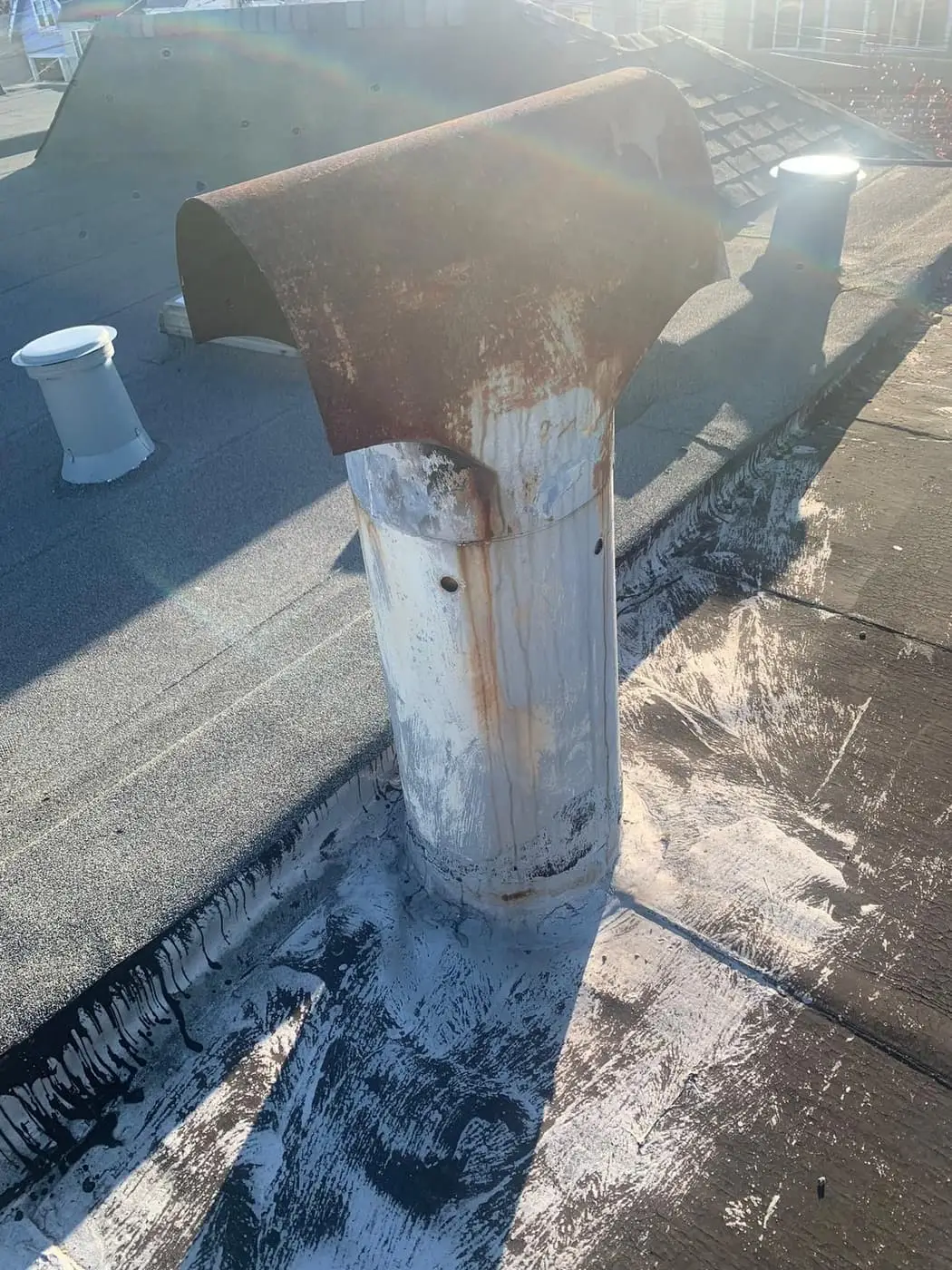
A flue pipe with a rusted hood on a flat roof
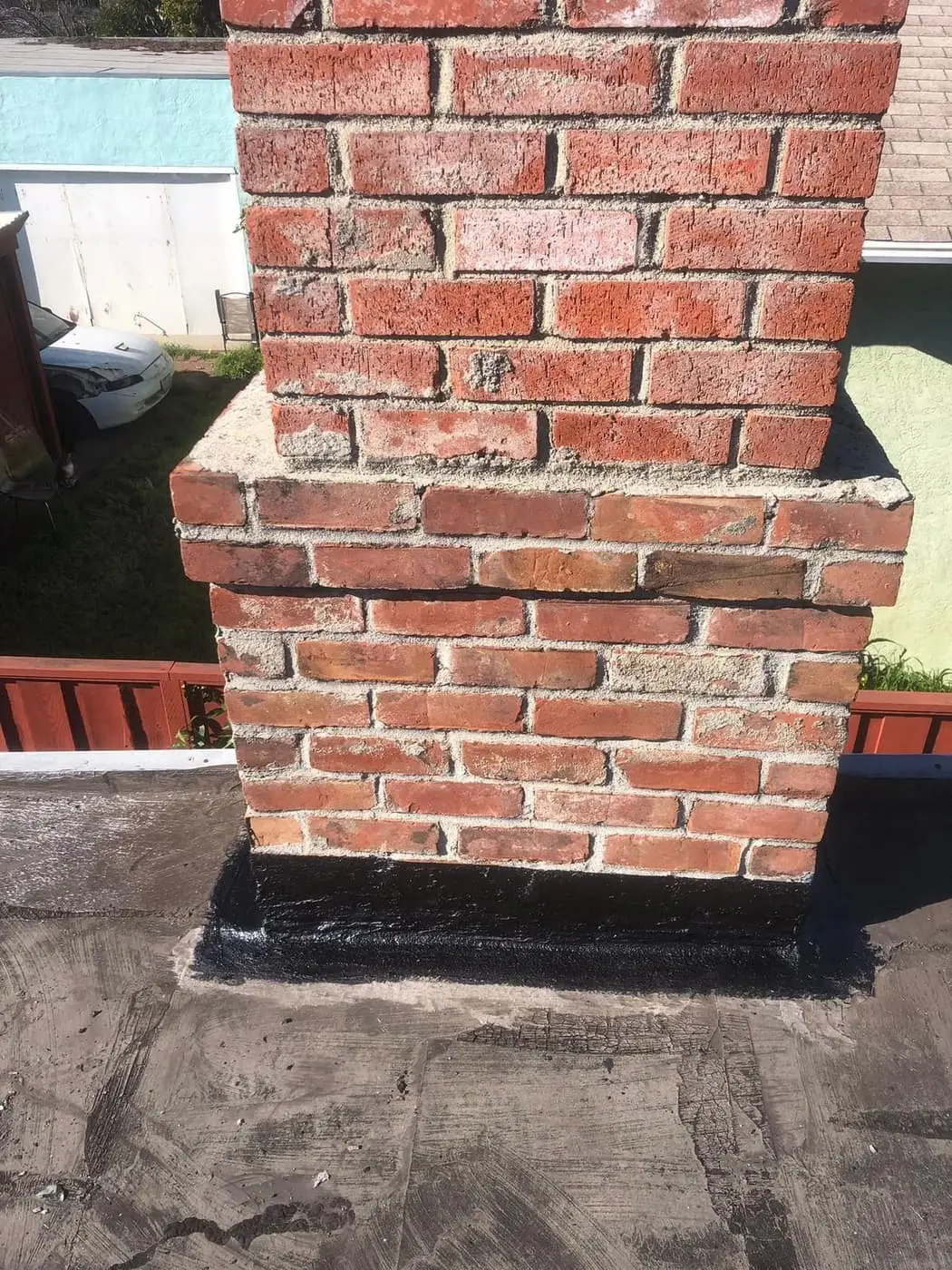
Black sealant around the base of a brick chimney on a flat roof
What Hunterdon County homeowners are saying
A selection of our 5-star reviews on Google.
Work was carried out by an expert who knew just what proportions of air to fuel were required for a brick fireplace system to burn cleanly.
It was no longer a strong pick. The service fixed the damper and got rid of the sticky creosote. Now it's easy to start fires and they burn constantly. Every time we light it, we can see the difference.
Top-notch service! They showed up right on time, which is rare these days. The technician took the time to explain everything and showed me exactly how much soot was clogging the flue. Fast, clean, and very reasonably priced. I will definitely be using them every year from now on!
Chimney repair questions we hear most
Do I need a permit to repair my chimney in New Jersey?
It depends on the scope of work and which town you’re in. New Jersey’s code is enforced locally. Readington runs its own construction office, and other Hunterdon towns route permits through the state.
How do I know if a leak is coming from the crown, the cap or the flashing?
From the ground these leaks look almost identical: a ceiling stain, ash on the damper, a musty smell. We tell them apart with a roofline check and a camera pass down the liner.
Can the crown be repaired, or does the whole chimney need to be rebuilt?
Most of the time, yes. The crown can be repaired without touching the rest of the stack. A rebuild only comes up once the brick itself has started to spall.
Does homeowners insurance cover chimney repair?
That depends on your policy and what caused the damage. Sudden storm damage is more often covered than gradual freeze-thaw wear, which most policies treat as maintenance.
What is the difference between repointing and a full chimney rebuild?
Repointing replaces the mortar joints between the bricks while the brick stays in place. A rebuild takes the stack apart. That’s only necessary once the brick itself has failed.