Which Flue Is Yours in a Two-Family or Rowhouse Chimney?
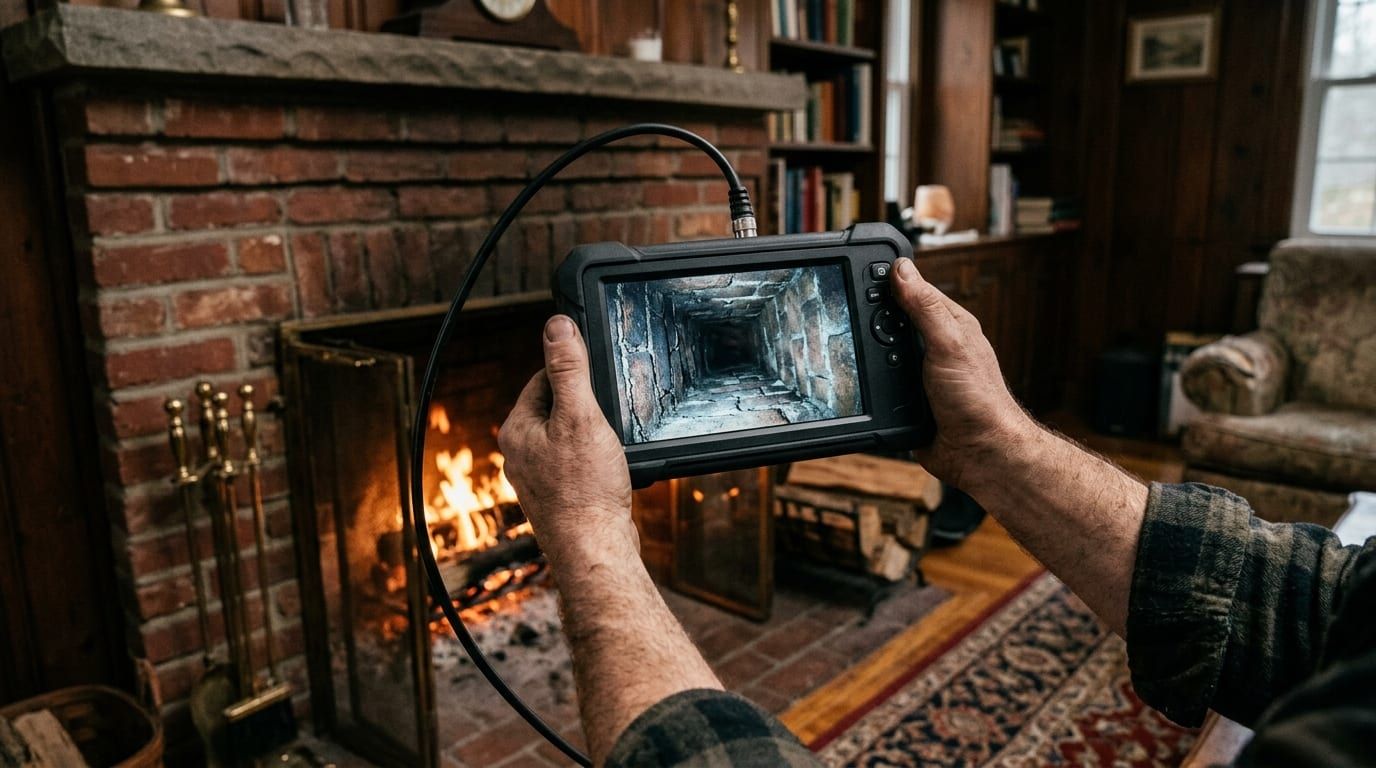
A shared chimney chase can carry two, three, or more separate flues, one for each appliance or unit it serves — and from a basement or attic, there is often no reliable way to tell which one is yours. A camera scoped down the flue traces the actual physical run, connection to termination, and settles it for good.
Which flue is yours — the short answer
In a shared chimney chase — a two-family, a duplex, or a row of attached townhouses — each appliance and each unit usually has its own flue running the full height of the stack, separate from the flue next to it. But older twins and converted multi-family buildings were sometimes built or altered with one masonry stack carrying flues for two households at once, and decades of appliance swaps can leave a connector routed to the wrong liner. Looking down from the roof or up from the basement rarely settles which flue belongs to which appliance, because every liner in the chase looks the same from either end. A camera scoped down the flue from your own connection point traces the physical run to its actual termination, which is the only way to know for certain.
Why one chimney can hold more than one flue
A masonry chimney built to serve two households — a duplex, a converted twin, or an older two-family — was often built with two or three clay tile liners bundled inside one exterior stack rather than one liner per house. Bricked, corbelled masonry chases like this show up across the county's oldest housing stock, where a single visible stack on the roofline can be hiding several independent flues stacked or bundled side by side, each connected to a different appliance below. Nothing on the outside of the chimney tells you how many flues are actually inside it or which one ties back to your furnace, water heater, or fireplace.
- A shared exterior stack does not mean a shared flue — each liner usually runs independently top to bottom
- Older twins and converted two-families are the likeliest place to find bundled flues
- The number of flue caps or thimbles at the top is not always visible or countable from the ground
- An appliance connector can be re-routed to a different liner during a repair without anyone recording which one
What a shared chimney looks like in Readington's own townhouse rows
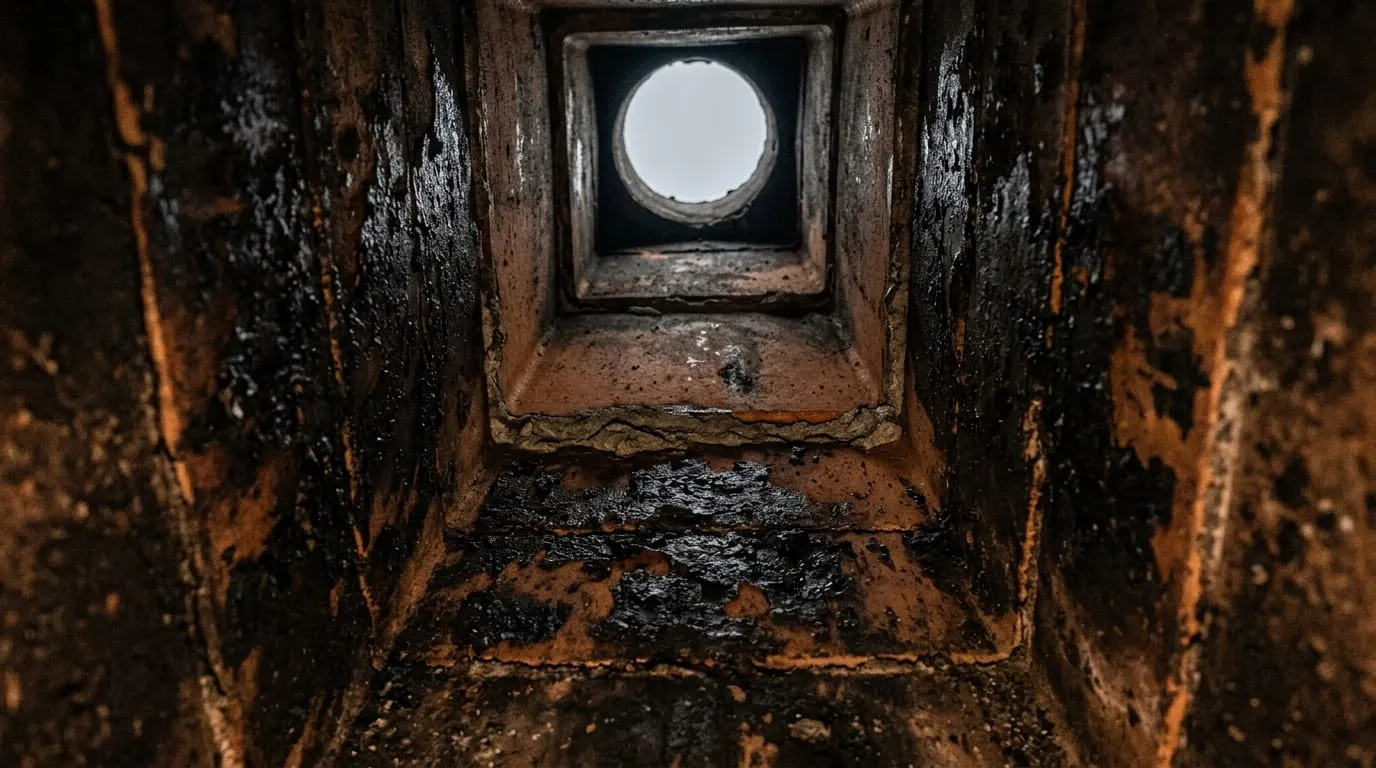
912 of Readington Township's housing units — 14.1% of the total — are single-family attached homes, concentrated around the Whitehouse Station townhouse belt. Attached construction like that puts flues in shared chases and party walls by design, and it is almost always the newer, factory-built kind: a listed Class A or Type HT insulated metal chimney system rather than site-built masonry. Those systems are held to their own limits under the residential code — no more than a 30-degree offset and no more than four elbows in the run — and a shared chase makes it easy for a route installed decades ago to have drifted past what the original design called for without anyone noticing from inside either unit.
Where shared and party-wall chimneys turn up across the service area
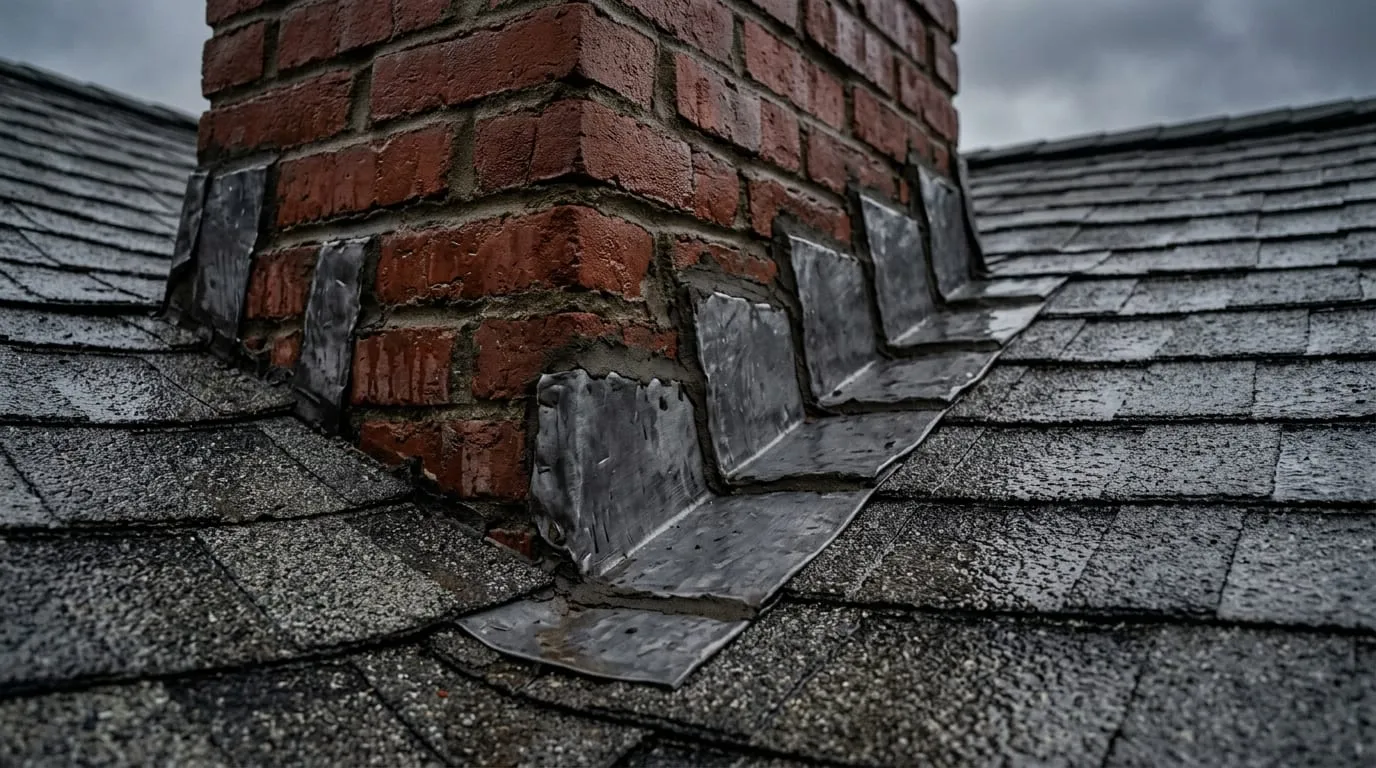
Readington's own attached housing is not the only place this comes up. Flemington Borough — the county seat and the densest housing in Hunterdon at over 2,000 units per square mile — has 56.9% of its stock in multi-unit structures, including buildings of fifty or more units, where flues and vents share chases as a matter of course. Raritan Township carries the largest townhouse population in Hunterdon outside Lambertville at 2,078 attached units, most of it 1980s factory-built chimney systems installed in rows. Farther into Somerset County, Bernards Township puts 45.4% of its housing into attached or multi-family construction, and Franklin Township's stock is only 46.5% detached houses — a majority of its homes share walls, chases, or both.
- Flemington Borough: 1,247 units (56.9%) in multi-unit structures, the densest housing in Hunterdon County
- Raritan Township: 2,078 single-family attached units (22.3%), largely 1980s factory-built chimney rows
- Bernards Township: 45.4% of housing is attached or multi-family construction
- Franklin Township: only 46.5% of units are detached houses
The twin and duplex problem: one stack, two households
The clearest version of this problem shows up in older twins and duplexes, where a single masonry stack straddles the party wall and was built to serve both households from the start. In Pennsauken Township, 1,544 units — 11.3% of the housing stock — sit in two-to-four-unit structures where one stack commonly serves more than one dwelling, and flue-to-flue leakage across that party wall is invisible from inside either unit; it only shows up on a camera inspection. Collingswood Borough's older duplexes carry the same layout: 781 units in two-unit structures plus another 1,197 single-family attached homes, with no reliable record on either side of the wall showing which flue belongs to which house.
Why a camera answers what the basement can't
A visual check from the basement or the roof tells you how many thimbles or caps are visible, not which liner runs behind which wall or which appliance ends up connected to which flue several floors up. Renovations, appliance swaps, and repairs done over decades in a shared chase rarely leave a record of which liner is which, and a connector that looks like it points toward your furnace can just as easily run behind the wall to your neighbor's. A camera scoped down the flue, beginning at your own appliance connection, follows that specific physical run — through the chase, past any offsets, to its actual termination at the top — and settles the question with video, not a guess from either end.
Questions about shared chimneys and flues
How do I know which flue in a shared chimney belongs to my unit?
The only reliable way is a camera scoped down the flue, beginning at your own appliance's connection point, following that specific liner up to where it actually terminates. Looking from the basement or the roof only shows how many openings exist, not which one is wired to which appliance.
Can one chimney chase really carry more than one flue?
Yes. A single exterior stack can bundle two or more separate liners inside it, each running independently from a different appliance or unit to its own termination point. This is common in older twins, converted two-families, and factory-built townhouse rows built with one shared chase for several homes.
Is a shared or party-wall chimney a safety concern for my neighbor's unit too?
It can be. Flue-to-flue leakage between two liners bundled in the same chase, or a connector routed to the wrong liner, is invisible from inside either living room and can affect both households at once. That is exactly the kind of finding a camera scope down the flue is built to catch.
What does a camera scope find that a basement look can't?
A basement or attic look only shows the parts of the run you can already reach and see. A camera scoped down the flue follows the entire physical path from your appliance's connection to the actual termination point, including sections hidden in shared chases and behind walls, which is where a misrouted or leaking flue is most often found.
Not sure which flue is yours?
A camera scoped down your flue traces the actual run from your appliance to its termination and settles it with video, not a guess. Call, or request a free estimate, and we'll walk through what a scope of your chimney would show.
Start with the flue itself
Chimney Inspection
A Level 2 video scan traces the exact flue serving your appliance, wall to termination.
See what's includedChimney Sweep
Camera up first to confirm which flue is yours, then a full brush-out of that one.
See what's includedChimney Repair
Relining or rebuilding whichever flue in a shared stack the camera flags.
See what's included