How Often Should You Sweep a Chimney? Ask What's Burning First
A number by itself is a guess. What actually sets a sweep schedule is what's burning in the flue and how it's burned — wood, gas logs, and an oil-fired appliance don't wear a chimney at the same rate, and two Hunterdon County houses on the same block can land years apart on paper.
The straightforward answer
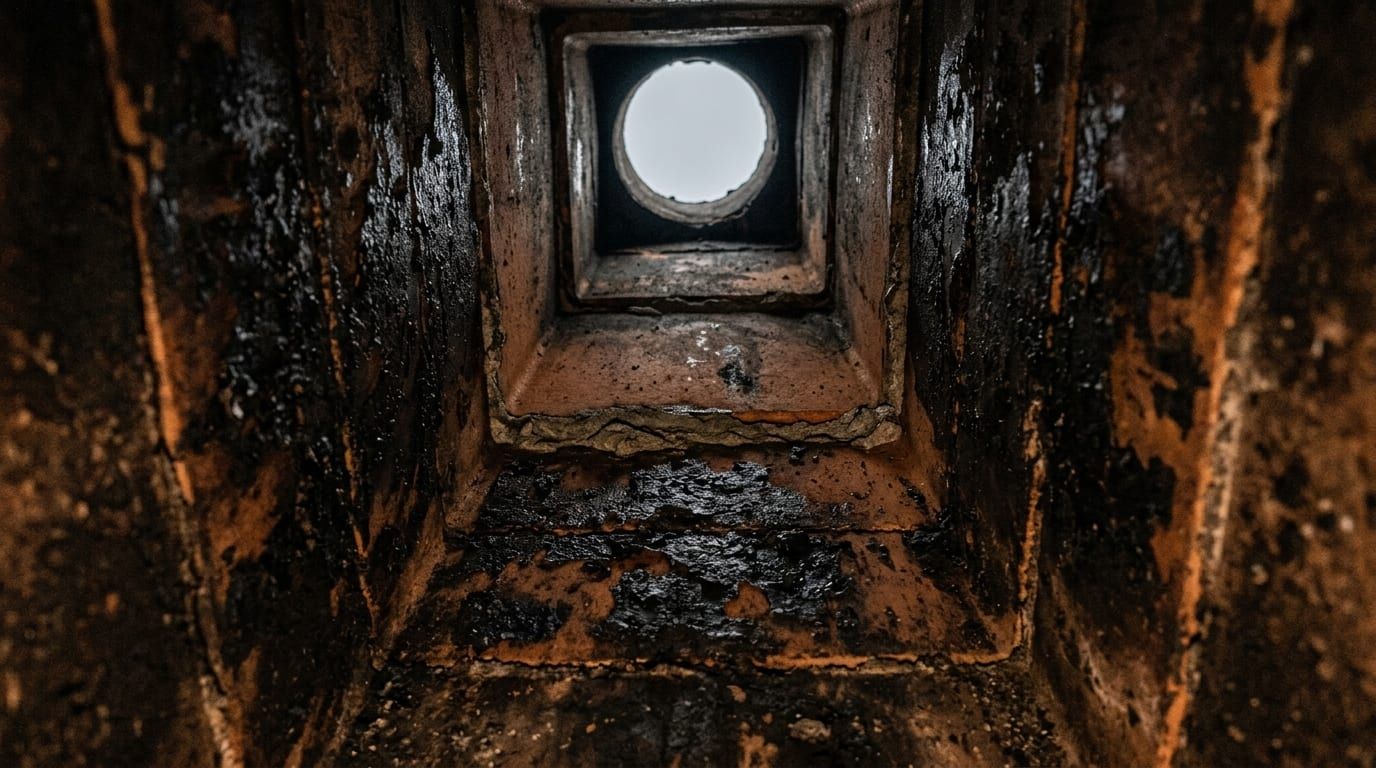
There's no single number that fits every chimney, because what sets the interval is the fuel and the way it's burned, not a date on a calendar. A wood-burning fireplace or stove used through a full New Jersey winter typically wants a look — and, often, a sweep — about once a year, sooner if the wood was split earlier that same season or the fire gets banked low to burn through the night. A gas log or gas insert leaves no soot behind, so brushing isn't the point of its yearly visit — an inspection is, since the flue itself keeps aging through corrosion even when nothing builds up inside it. An oil-fired chimney sits in between, with no visible buildup like wood but an acidic residue that glazes a liner over years, which is why NFPA 211, the national standard covering chimneys, fireplaces, and vents, asks for one annual look at every fuel type and adds cleaning only when that look calls for it.
Wood: Roughly a Season, But Habit Moves the Number
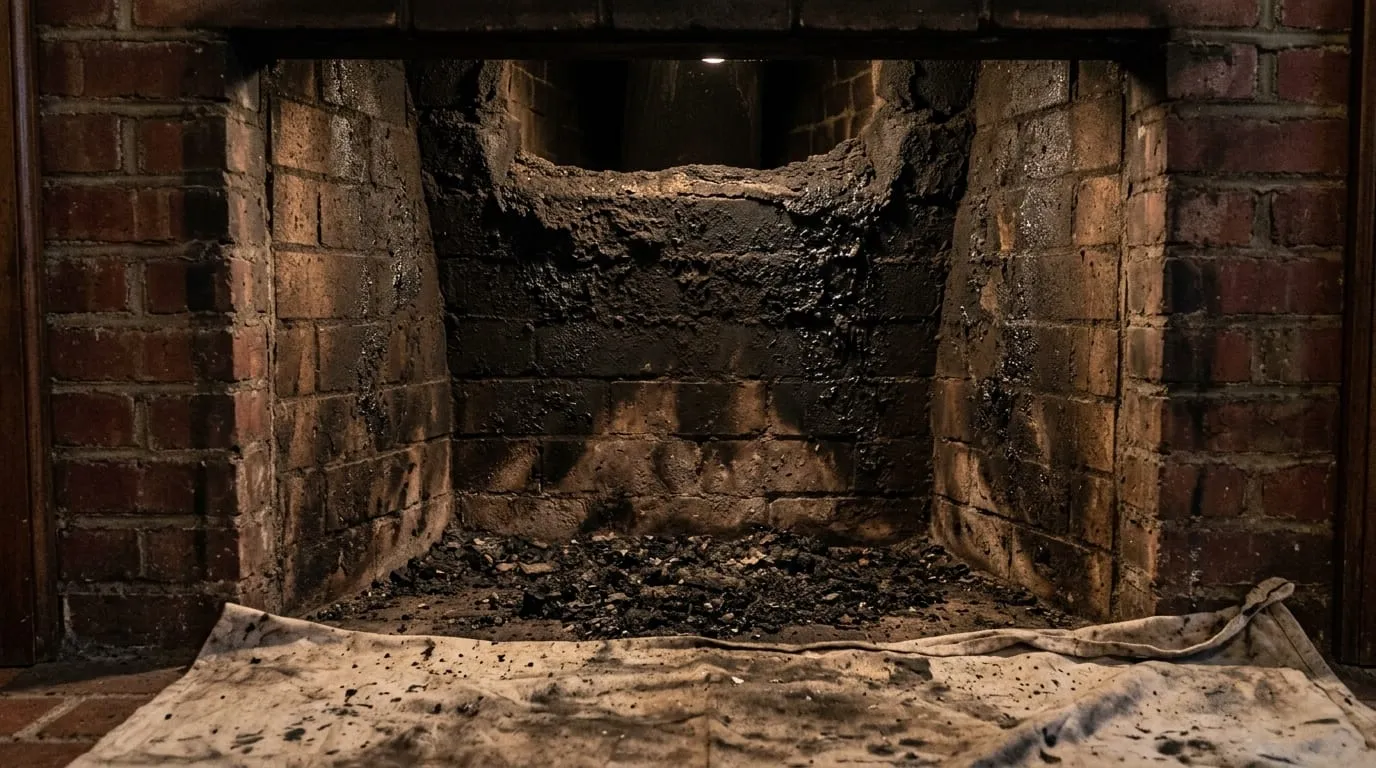
Creosote is what a wood fire leaves behind when the smoke cools before it clears the flue, and how fast it builds depends on the wood, the fire, and the flue itself more than on the date. A well-sized flue burning logs that had a full summer to season, run hot enough to carry the smoke straight out, can go a whole winter with only a light, flaky coating. The same flue, fed logs split earlier that same year or a fire smothered low to last until morning, can glaze over far sooner. Readington's own numbers show why this matters locally: 167 households in the township burn wood as their primary heat, and that federal count tracks primary heating only, so it doesn't see the stove or fireplace burning as a supplement in many of the roughly 6,200 other occupied homes.
- Smoke drifting back into a room where the draft used to feel strong
- A sharp, sooty smell coming from a cold, unlit fireplace
- Deposit that scrapes off tacky or glossy rather than dry and flaky
- A stove or insert throttled low overnight to stretch a load of wood
Gas Logs and Gas Inserts: The Job Is a Look, Not a Brush
A gas log or a gas fireplace insert doesn't leave soot in a flue the way wood does, so there's rarely anything for a brush to remove. That doesn't make the chimney maintenance-free — it changes what the annual visit is for. Gas exhaust leaves the appliance cooler and wetter than a wood fire's does, and in an older masonry flue built for a bigger appliance than the one now connected to it, that moisture can settle on the way up and turn mildly acidic against the mortar and tile. Flemington Borough is the clearest local example of a gas-heavy area: 75.6% of its households run on mains gas and none report wood as a primary fuel, yet the annual visit there is still worth booking, because the wear this fuel causes is quiet enough to go unnoticed for years.
Oil-Fired Flues: Where Hunterdon's Older Housing Runs the Numbers
Oil doesn't glaze a flue the way wood does, but it isn't clean either — the exhaust carries an acidic soot that etches mortar and liner tile a little more with every heating cycle, which is exactly the kind of wear an annual look is built to catch early. This isn't a minor fuel type around here: 1,281 Readington households heat primarily with fuel oil, and just north in Lebanon Township that share climbs to 52.5% — more than half the town, the highest of any municipality Royal Chimney serves. New Jersey's own paperwork acknowledges the risk directly. Whenever a furnace, boiler, or water heater gets replaced, the installer has to sign a state verification form confirming the connected chimney is lined and sized for whatever's now venting into it, a requirement that exists because an unlined or oversized masonry flue is still a routine find in housing built before that rule caught up with it.
- More than one heating season since the flue's last look
- Oil deliveries arriving more often than they used to
- A liner that's never been camera-checked since the last furnace or boiler swap
- A pre-1980 house on an oil-fired system — Hunterdon's most common combination
The Habit Matters as Much as the Fuel
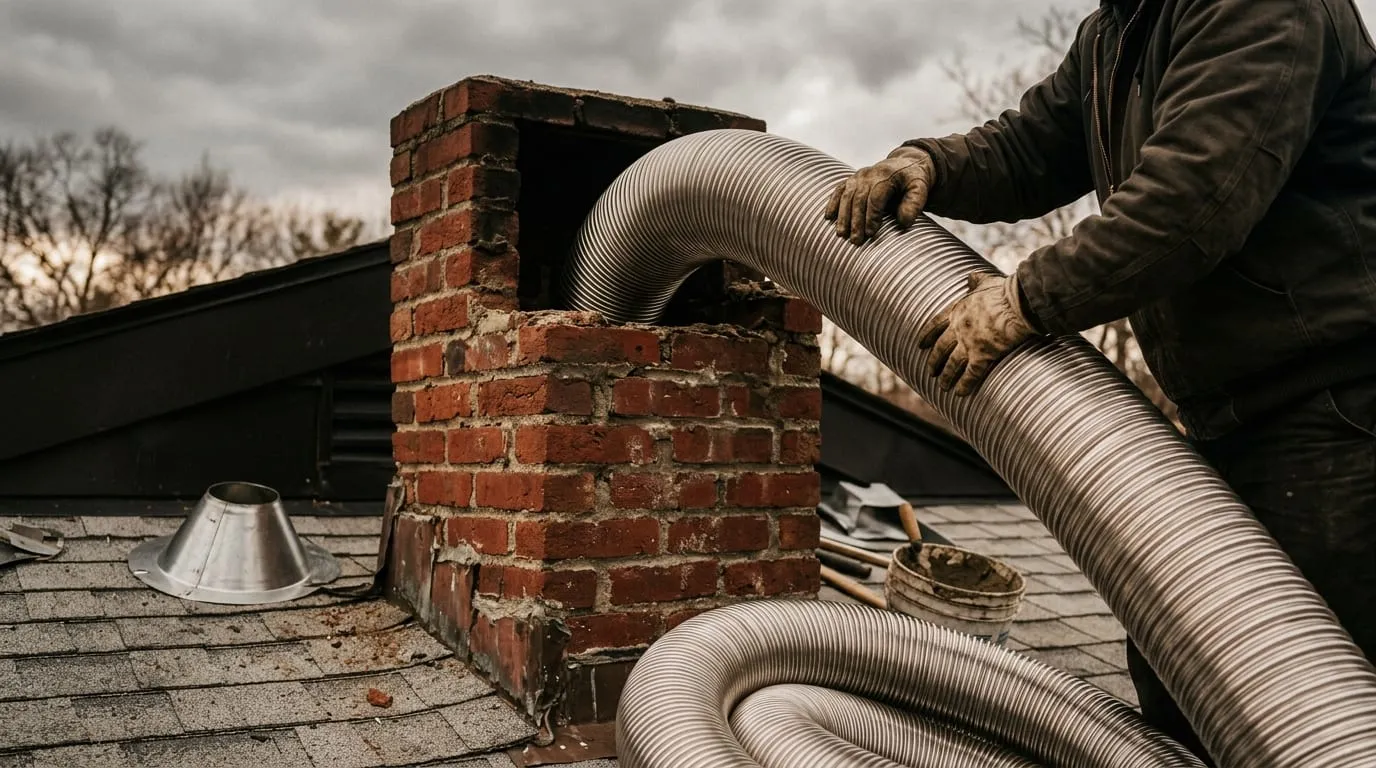
Two households burning the identical amount of the identical fuel can still end up on different schedules, because how a fire is run changes the chemistry as much as what's in it. A hot, fully-burned fire sends smoke up and out while it's still warm enough to keep moving; a fire smothered down to last through the night, or an appliance too small for the flue it's venting into, lets that same smoke cool and drop its residue on the way. Readington's own housing adds a wrinkle worth knowing about: 912 units in the township are single-family attached, which can put two households' flues in one shared chase, meaning a schedule set by what your household burns doesn't automatically cover what's venting next door.
- Dry, well-seasoned wood versus logs split the same year they're burned
- A fire run hot and fully out versus one banked down overnight
- A shared chase in attached or townhouse-style construction
The Only Schedule That's Actually Yours
The honest version of this answer is that the only way to know your own number is to have somebody look — the camera pass that opens a chimney sweep visit here is built around exactly that question, not a guess based on the season or the fuel type on file. What that pass finds decides whether a visit ends in a brush, a note to check back next year, or a referral for a repair, and it's the same starting point whether the flue in question is venting a wood stove, a gas insert, or an oil-fired boiler nobody has looked down since the day it went in.
How-often questions, answered
Is there one fixed interval every chimney should follow?
No — the interval depends on the fuel and how it's burned, not a fixed number of months. That's why a rough guideline like once a year happens to fit a lot of households without being a rule any of them are actually following.
My fireplace burns gas logs — does it ever need sweeping?
Rarely for soot, since gas doesn't leave the kind of deposit wood does. It still deserves an annual inspection, because the flue can corrode from the moisture in gas exhaust even when nothing looks visibly dirty.
How would I know if my oil-fired chimney is overdue?
A furnace or boiler that's grown harder to start, more than a year since the flue was last looked at, or an oil delivery schedule that's crept upward are all reasons to book a look. Royal Chimney Readington is rated 5.0 from 24 Google reviews for exactly this kind of camera-first inspection across Hunterdon County.
Can I check my own chimney between professional visits?
A cold-eye check helps: with no fire lit, shine a flashlight up past the damper and see what's on the visible walls. Flaky, powdery residue that brushes off easily is a good sign; anything gummy, hard, or glass-like is worth a professional look before the next fire. It's a rough gauge, not a substitute for a proper inspection, but enough to judge whether a visit can wait a season.
Ready to Find Out Where Your Chimney Actually Stands?
A camera pass down your flue answers the how-often question for your specific chimney instead of a guess based on fuel type alone. Get a free estimate and we'll tell you what the visit should include.
Keep Reading About Your Chimney
Chimney Sweeping in Readington
Camera first, then brushes — the visit this article keeps pointing back to.
Read this nextThe Three Stages of Creosote
What builds up between sweeps, and which stage still brushes off clean.
Read this nextWhich Flue Is Yours in a Two-Family?
In a shared chase, one household's sweep schedule doesn't answer for the other.
Read this next