
First, Second, and Third-Degree Creosote: What Each Stage Means
Creosote does not build up the same way twice. It hardens in three recognized stages — a dry, flaky layer, a harder textured crust, and a glazed, tar-like coating — and which one your flue is in decides whether the fix is a routine brushing or something closer to a repair.
Creosote stages, the short version
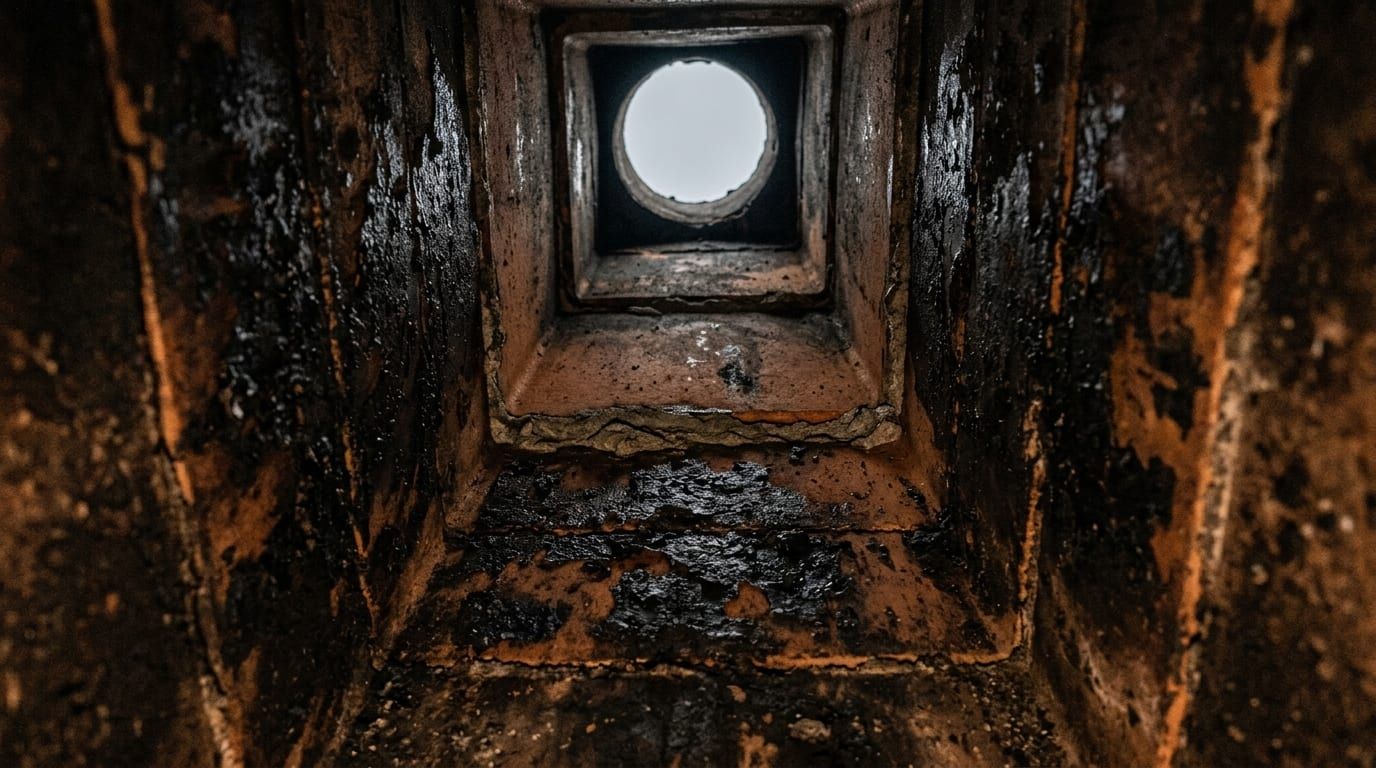
Chimney creosote hardens in three recognized stages, and each one calls for a different response. First-degree creosote is a dry, flaky soot that a standard rod-and-brush sweep clears in a single pass. Second-degree creosote is harder and more textured — sometimes described as bumpy or crusted — and usually needs a rotary or chain brush to break it loose. Third-degree creosote is a shiny, glazed coating that can run like melted tar down the flue wall; it is the buildup fire-safety standards point to most often when a chimney fire starts, and getting a flue back from that stage can mean chemical treatment and a hard look at whether the liner underneath survived. A camera pass during an inspection is what actually tells you which stage you are dealing with, not a guess from the hearth.
How Ordinary Wood Smoke Turns Into Creosote
Burning wood never converts completely to heat and ash. Along with the smoke you can see, it releases unburned hydrocarbons, water vapor, and fine tar particles that stay gaseous as long as they are hot enough to keep moving. The trouble starts higher up the flue, where that vapor meets a cooler surface and condenses back into a solid — the same way steam turns to water on a cold window. A flue that runs cool for its size, or a fire that never burns hot enough to keep those vapors moving, hands more of that condensate to the wall on every single burn.
- Burning green or unseasoned wood, which carries more moisture into the smoke
- A damper or air supply closed down too far, so the fire smolders instead of burning hot
- A flue that is oversized for the appliance, cooling the smoke faster than it should
- Short, low, overnight-style burns instead of full fires that run hot enough to clear the flue
Stage One: Loose, Flaky Soot
First-degree creosote looks like dry black soot — dull, powdery, and light enough that some of it lifts into the air if it is disturbed from below. It has not bonded to the flue tile or liner yet, so a standard steel or poly brush run the length of the flue knocks it loose in one pass. A chimney that gets swept every year, burning reasonably dry wood, tends to stay in this stage — it is the version of creosote a routine sweep is built to catch before it becomes anything harder to remove.
Stage Two: Hardened, Textured Buildup
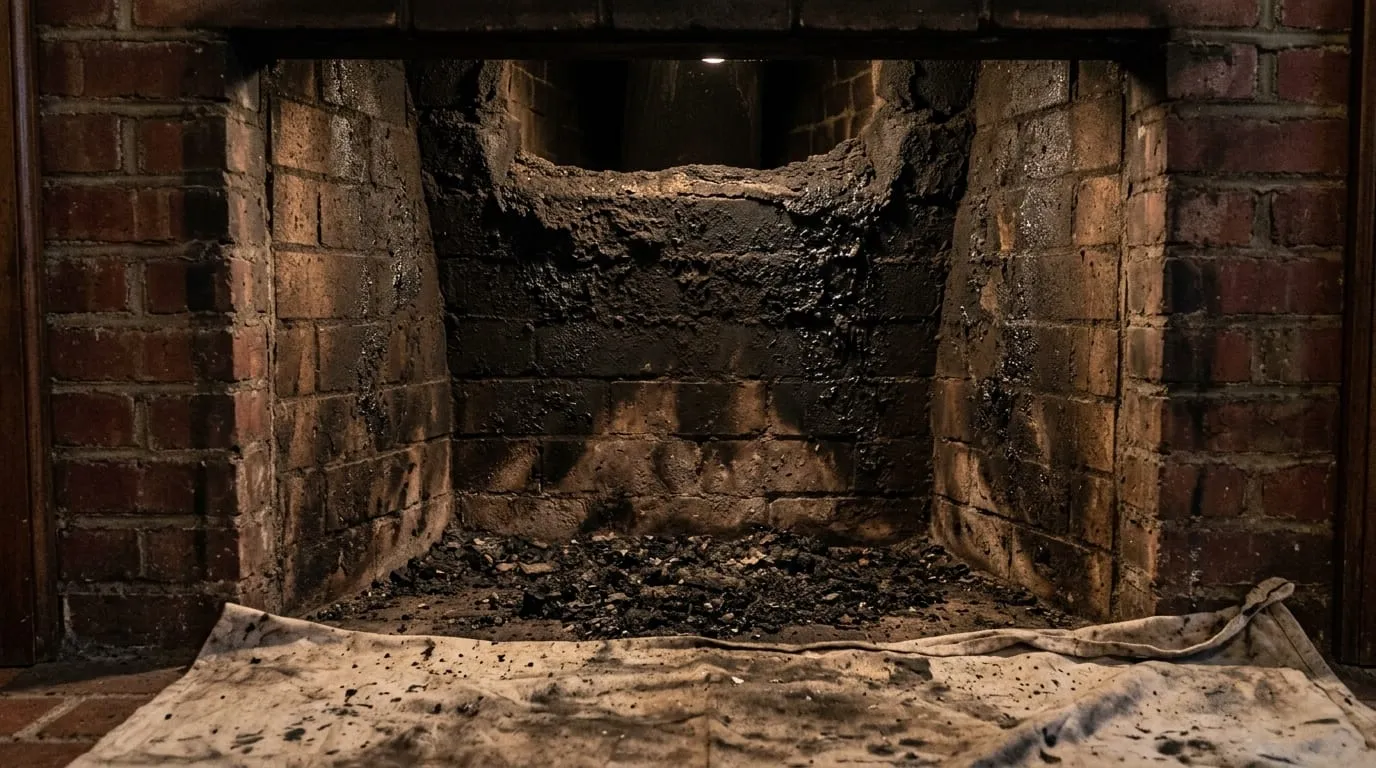
Second-degree creosote is what first-degree becomes when it is not removed, or when the fire that produced it ran cooler and smokier than a clean burn. It sets up harder and rougher, sometimes described as a crust of bumps and ridges rather than a flat coat of soot. A standard wire brush struggles against it — clearing it usually calls for a rotary loop, a chain flail, or repeated passes, because the coating has bonded to the tile instead of resting on top of it.
- A sweep that gets pushed past a year, giving stage-one soot time to bake harder
- Wood that was cut and split too recently to have dried properly
- A wood stove or insert run on long, low, air-restricted burns
- A flue that runs cooler than the appliance connected to it was designed for
Stage Three: Glazed Creosote and the Fire Risk
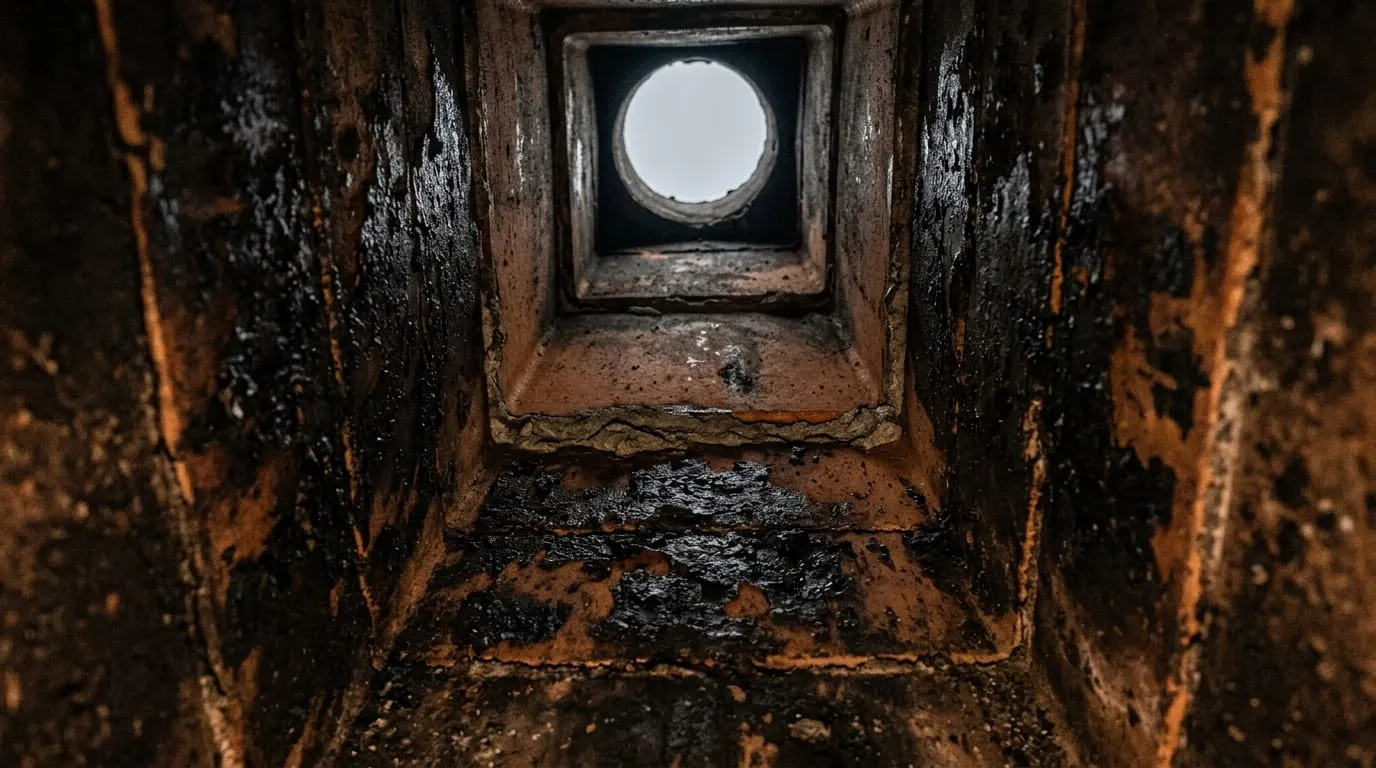
Third-degree creosote is the stage worth taking seriously. It forms when stage two keeps accumulating and the flue goes through repeated heating and cooling cycles, fusing the buildup into a hard, shiny glaze that can run and drip like melted tar when the appliance is hot. It is also the most flammable form creosote takes, which is why national fire-safety guidance points to uncleaned creosote — overwhelmingly from solid-fuel equipment — as the leading contributing factor behind home heating fires. Clearing it is rarely a single brushing: it typically takes a chemical creosote softener ahead of mechanical cleaning, sometimes more than one visit, and afterward a real look at whether the liner underneath is still sound or was damaged by the heat that built the glaze in the first place.
- A strong, tar-like odor from the fireplace even when it is not in use
- Dark, sticky drips or streaks around the damper or the top of the firebox opening
- A shiny, almost wet-looking sheen on the flue wall during a camera inspection
Why a Rarely-Used Fireplace Can Still Reach Stage Three
Government heating statistics only ask what fuel a household uses for its primary heat, so a wood stove or fireplace that supplements a gas furnace never shows up in that count at all. In Readington Township, 167 households report wood as primary heat — and next door in Lebanon Township, 184 households, 7.3 percent, do, plus another 153 on an unclassified fuel, putting 337 homes, better than one in eight, on some form of solid or unlisted fuel. None of those counts include the fireplace that only gets lit a handful of times a winter, which is exactly the pattern that lets creosote sit undisturbed long enough to reach the glazed stage. Infrequent use does not mean infrequent buildup, and fire-safety guidance calls for that flue to be inspected at least once a year regardless of how often it gets used.
Creosote and chimney fire questions
How do I know which stage of creosote is in my chimney?
The only reliable way is a camera pass down the flue during an inspection. Stage one looks dull and flaky, stage two is rougher and harder, and stage three shows up as a dark, glossy sheen on the wall. Guessing from the hearth or the smell does not tell you which one you are dealing with.
Does an oil or gas appliance produce creosote too?
No. Creosote specifically comes from incompletely burned wood smoke condensing in the flue. Oil-fired appliances leave a different residue — an acidic, glazed soot on the tile that forms through a separate process and needs its own cleaning approach, not a creosote brush.
Can I burn a hot fire to clear creosote out myself?
That is not a safe way to remove it, and at stage two or three it can be the spark that starts a chimney fire rather than a cure for one. Creosote comes out with mechanical brushing, and heavier stages sometimes need a chemical softener first — not a deliberately hot burn.
If my fireplace only gets used a few times a winter, does it still need sweeping?
Yes. Fire-safety standards want every chimney, fireplace and vent looked at yearly no matter how rarely it is lit, and an occasional-use fireplace is exactly the kind that can sit long enough between fires for creosote to reach a heavier stage unnoticed.
Find Out Which Stage Your Chimney Is Actually In
This article explains the mechanism — it is not a look at your specific flue. A camera inspection is what actually tells you whether you are looking at a quick brushing or something that needs more attention, and it is the first step of every visit.
The Service This Calls For
Chimney Sweeping
Camera-first cleaning that clears creosote before it reaches a harder stage.
See this serviceChimney Inspection
A closer camera look that grades exactly what stage a flue is in.
See this serviceFireplace & Stove Service
Damper and appliance work alongside the flue itself.
See this service