Level 1 vs. Level 2 Chimney Inspection: What Each One Covers
A Level 1 inspection covers what's visible and reachable on a chimney that isn't changing. A Level 2 adds a full video scan of the entire flue — the inspection most home sales, insurers, and fuel conversions in New Jersey actually call for. Here's what separates them, and which one a Readington Township chimney needs this year.
Level 1 or Level 2 — the straight answer
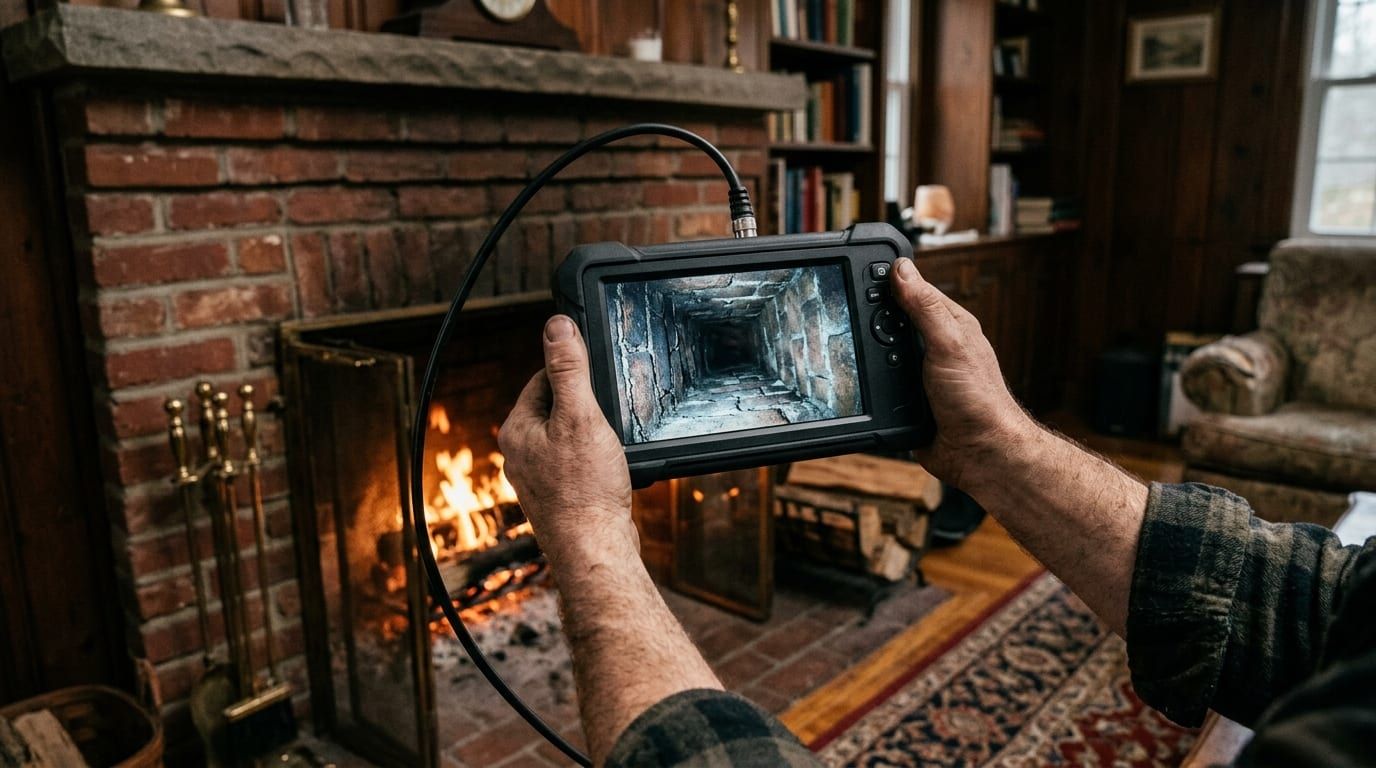
A Level 1 inspection checks everything reachable without opening anything up — the crown, the damper, the firebox, and as much of the flue as a flashlight and mirror show. A Level 2 adds a video scan down the entire flue, including sections hidden behind walls and in the attic, and it's the inspection asked for by name before a home sale closes, before an insurer will bind or renew coverage on a house with a working fireplace or wood stove, and before a fuel conversion goes forward. Readington Township runs its own construction office, and it publishes New Jersey's chimney verification form, UCC Form F370, directly on the township's Construction page — the form a contractor has to sign, not a homeowner, whenever fuel-fired equipment gets replaced. Either level ends the same way: a written report with photographs, not a verbal opinion.
What a Level 1 inspection actually checks
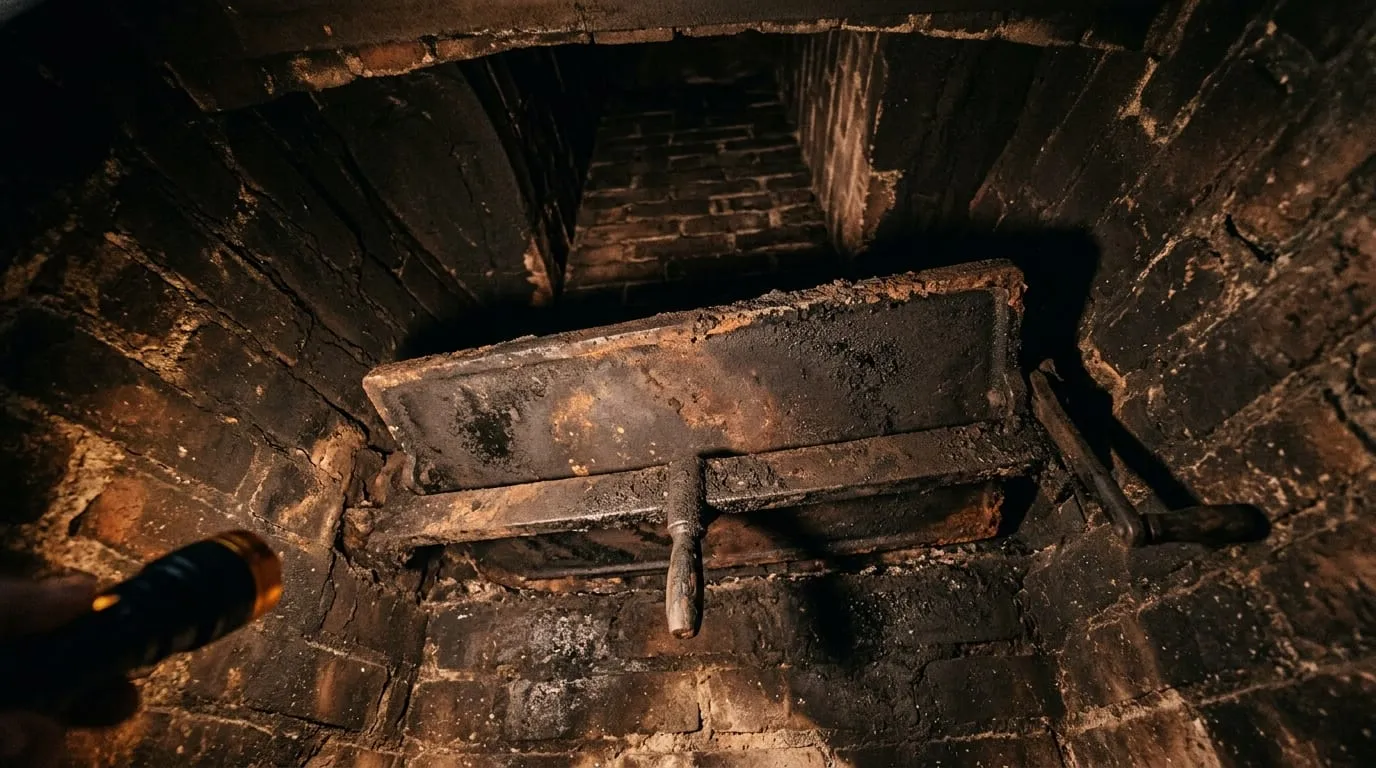
A Level 1 is the routine check NFPA 211 calls for at least once a year on a chimney that isn't changing — same appliance, same fuel, nobody buying or selling the house. It covers what's visible and reachable without opening anything up: the crown from the roofline, the damper and firebox from inside, and the flue as far as a flashlight and mirror show. Readington Township still counts 167 households with wood as their primary heat, and that's a floor, not a ceiling — the same census count misses every supplemental stove and fireplace burning alongside a furnace. For all of them, a Level 1 done every year is what keeps a working fireplace safe to light.
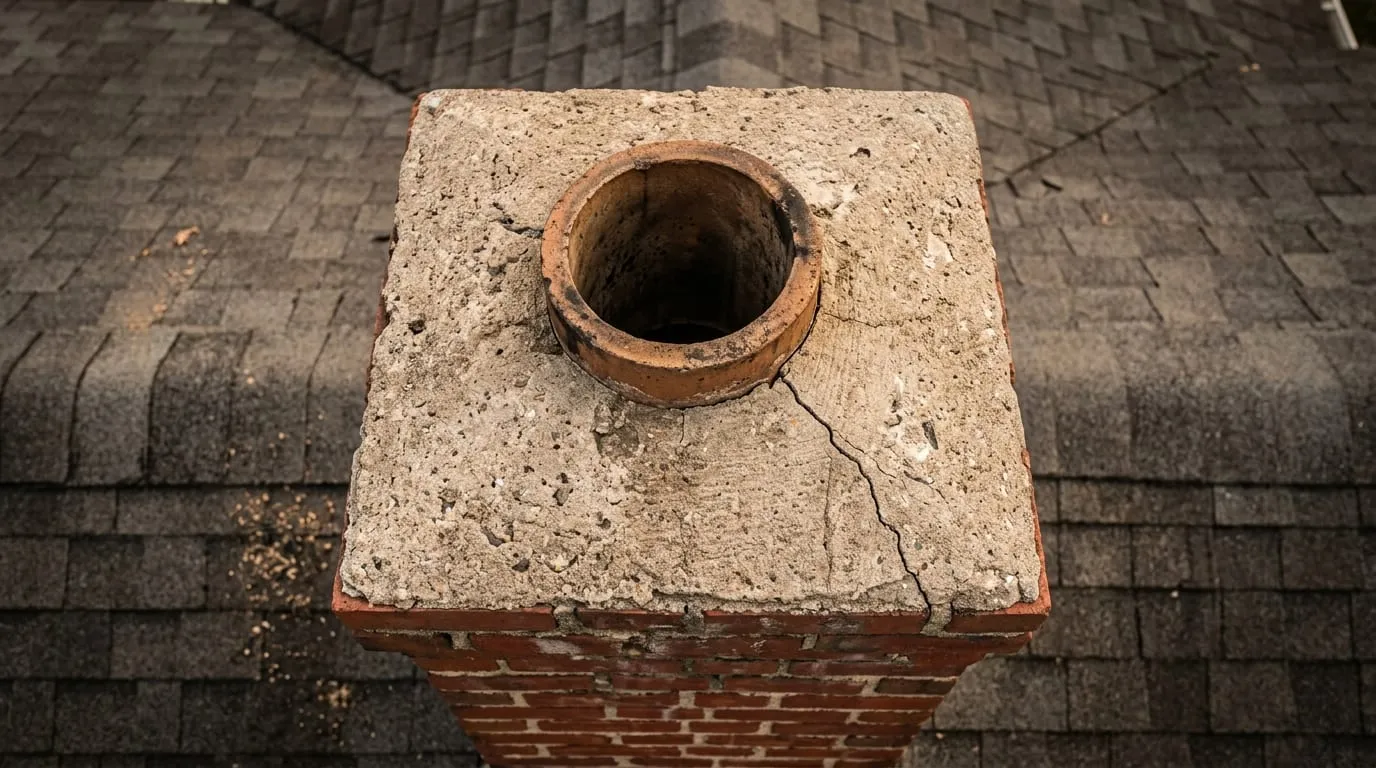
- The crown, crown wash, and any visible cracking
- The cap, chase cover, and roofline flashing
- The damper, firebox, and smoke chamber
- The flue as far as a flashlight and mirror reach
What a Level 2 adds: a full video scan
A Level 2 sends a camera down the entire flue — past the point a flashlight reaches, behind wall cavities, and up through the attic — and shows what's on the other side of a defect like the crack pictured here. It isn't a routine check. It's asked for by name before a house changes hands, before an insurer will write or renew a policy on a home with a working fireplace or wood stove, and before a contractor swaps an appliance's fuel. Where a Level 1 confirms nothing looks wrong from the spots you can reach, a Level 2 confirms nothing is wrong anywhere the flue actually runs.
What the written report is actually for
Every inspection, Level 1 or Level 2, ends the same way — a written report with photographs, not a verbal opinion. That report is the document three different parties ask for by name, each for a different reason.
- Home sale — New Jersey requires a smoke and carbon monoxide alarm certificate before a one- or two-family home can close, and that certificate assumes any fireplace or wood stove is safe to use, which is why buyers, agents, and title companies routinely want a written chimney inspection alongside it
- Insurance — an insurer deciding whether to write or renew coverage on a house with solid-fuel heat wants a dated report with photographed findings on file, not a phone call
- Fuel conversion — switching an appliance from oil to gas hands the new equipment a flue sized for the old one, and New Jersey's own chimney verification form has to be signed by whoever inspected it, never the homeowner
The New Jersey code behind both levels
New Jersey's one- and two-family dwelling subcode is the 2024 edition of the International Residential Code, enforced town by town under the state's Uniform Construction Code. Readington Township runs its own construction office rather than routing permits through the state, and it publishes New Jersey's chimney verification form, UCC Form F370, directly on the township's Construction department page next to the Construction Permit Application. The form exists for one reason: whenever a boiler, furnace, or water heater gets replaced, the installer has to certify the chimney is lined and sized correctly for the new appliance, and the form's own instructions say a homeowner can't file it in place of that inspection. A Level 2 report is usually what a contractor hands over to make that certification.
Which one a Readington chimney needs this year
If nothing about the house or the appliance is changing, a Level 1 is the inspection to schedule, and doing it every year is the whole ask. If a sale is on the calendar, an insurer has asked for paperwork, or an oil furnace is about to become a gas one, a Level 2 is the one that actually satisfies whoever's asking — handing a title company or an underwriter a Level 1 report when they expected a video scan just starts the request over. Roughly one in four homes in Readington Township heat with fuel oil or bottled gas, on flues no utility ever inspects. For that quarter of the township, the honest answer is usually a Level 2, scheduled ahead of time, rather than after somebody else forces the timing.
Level 1 vs Level 2 questions
What actually separates a Level 1 from a Level 2 inspection?
A Level 1 checks everything visible and reachable without opening anything up — the crown, the damper, the firebox, and as much of the flue as a flashlight shows. A Level 2 adds a full video scan of the entire flue, including sections hidden behind walls and in the attic.
Do I need a Level 2 inspection to sell my house in Readington Township?
New Jersey requires a smoke and carbon monoxide alarm certificate before a one- or two-family home can close, and that certificate assumes any fireplace or wood stove is safe to use — which is why buyers, agents, and title companies often ask for a written Level 2 report alongside it.
My insurance company is asking for an inspection. Which level do they want?
Almost always a Level 2. An insurer deciding whether to write or renew coverage on a home with a working fireplace or wood stove wants a dated report with photographed findings on file, not a verbal check.
I'm converting my furnace from oil to gas. Does the chimney need a Level 2 first?
Yes. A flue sized for an oil appliance isn't automatically right for a gas one, and New Jersey's chimney verification form, UCC Form F370, has to be signed by the contractor who inspected it — not by the homeowner.
Not sure which level your chimney needs?
Tell us what's changing — a sale on the calendar, an insurer asking for paperwork, or an oil furnace about to become gas — and we'll tell you which inspection actually answers it, then get you a written report either way.
Chimney inspection in Readington Township
Chimney Inspection
Level 1 and Level 2 inspections with a written report for a sale, an insurer, or a fuel conversion.
See what's includedChimney Sweep
Clearing the creosote and blockage a Level 1 inspection often turns up.
See what's includedChimney Repair
Crown, cap, flashing, and liner work for whatever the report flags.
See what's included