Switch a Furnace From Oil to Gas, and the Old Flue Can Be Too Big to Work Right
A masonry flue built to carry an oil furnace's exhaust is almost always bigger than a modern gas appliance needs, and that leftover size is common in Hunterdon County, where a large share of homes still burn oil. Here is what an oversized flue does to the appliance now venting into it, the signs it is already happening, and the liner that corrects it.
Oil to gas, and the flue left behind
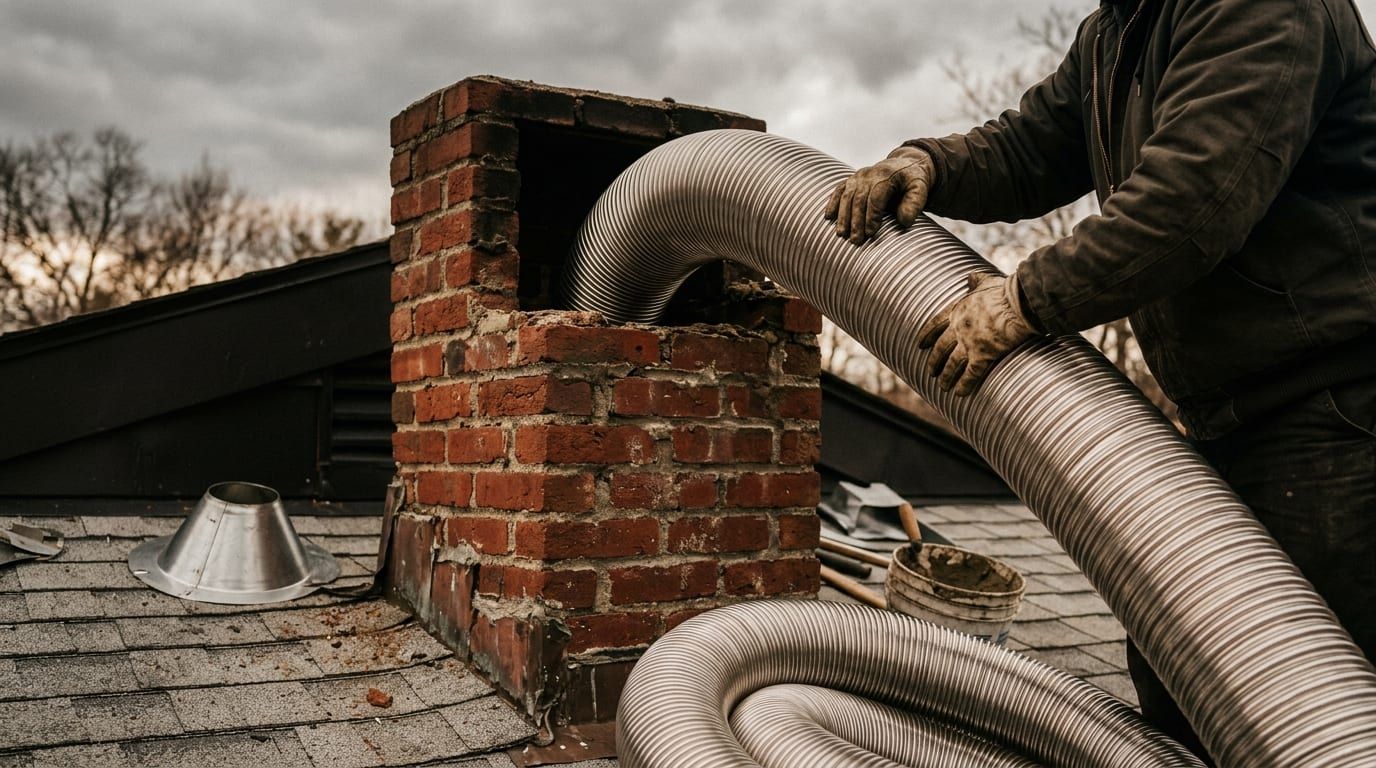
A chimney built to vent a coal or oil furnace is usually much larger than a modern gas appliance's exhaust requires, because oil and coal burn off far more flue gas at far higher volume than a gas furnace or boiler ever will. When that smaller, cooler gas exhaust rises through a flue sized for the old fuel, it slows down and loses its heat before it clears the top, and the water vapor it carries condenses on the masonry instead of leaving as vapor. That condensate picks up combustion byproducts on the way up and behaves like a mild acid, working on mortar joints and unlined clay tile for years before anyone notices from the outside. The repair is not a bigger cleaning — it is a liner sized to the appliance that is actually running now, not the one that used to be.
A Chimney Built for Oil Is Rarely the Right Size for Gas
Homes that heated with coal and later oil for decades typically got a masonry flue proportioned for those fuels — enough cross-section to carry a large volume of hot combustion gas straight up and out fast. A modern gas furnace or boiler puts out a fraction of that volume, and it runs cooler besides, especially with a higher-efficiency unit. Set a small, cool gas exhaust loose inside a flue built for a much bigger job, and it has room to slow down, spread out, and give up its heat to the surrounding masonry long before it reaches open air. Readington Township alone still has 1,281 households heating with fuel oil and another 297 on bottled or tank LP gas — homes where a future gas conversion will run straight into this mismatch.
- Coal- or oil-era masonry, often decades older than the furnace or boiler now venting into it
- A flue cross-section built for high-volume combustion gas, not a modern gas appliance's exhaust
- No liner added when the appliance's fuel changed
- Most common where fuel oil served the neighborhood before a gas main ever reached it
What Happens Once the New Appliance Is Running
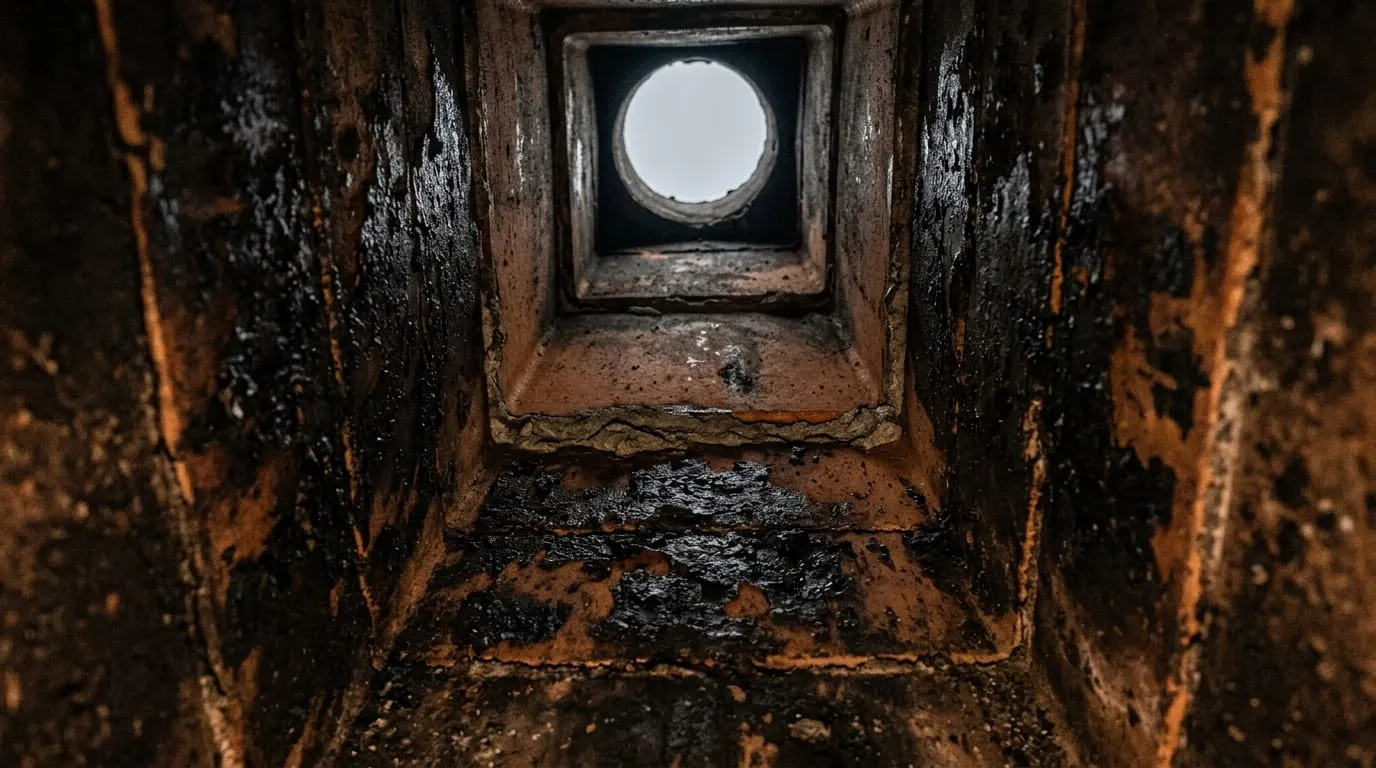
Switch the furnace over to gas and the exhaust volume drops sharply, and so does its temperature — a modern gas appliance simply is not pushing the same heat up the flue an oil burner did. Inside an oversized masonry flue, that cooler exhaust keeps losing heat as it climbs, spread thin across far more surface area than it needs with too little velocity behind it to matter. Once its temperature falls below the point where water stays a vapor, the moisture it carries turns back to liquid on the flue walls instead of escaping into the air outside. That water is not clean; it has picked up carbon dioxide and trace combustion byproducts on the way up, and it acts like a weak acid on mortar joints and unlined clay tile.
Signs the Flue Is Already Taking Damage
A flue absorbing acidic condensate for a few winters rarely fails all at once — the damage shows up as cosmetic first, then structural. None of these signs prove a conversion is behind them on their own, but any one is worth a second look on a chimney that changed fuels without a liner going in at the same time:
- White, chalky staining on the masonry — efflorescence, mineral salts drawn to the surface by moisture moving through the brick
- Chipped or crumbling mortar joints, or a spalled, flaking brick face where water has been working from the inside out
- A rusted or pitted damper, cleanout door, or chimney cap, all close to where condensate tends to collect
- A damp, musty smell near the firebox or basement cleanout that was not there before the appliance changed
The Fix Is a Liner Sized to the New Appliance, Not the Old Flue
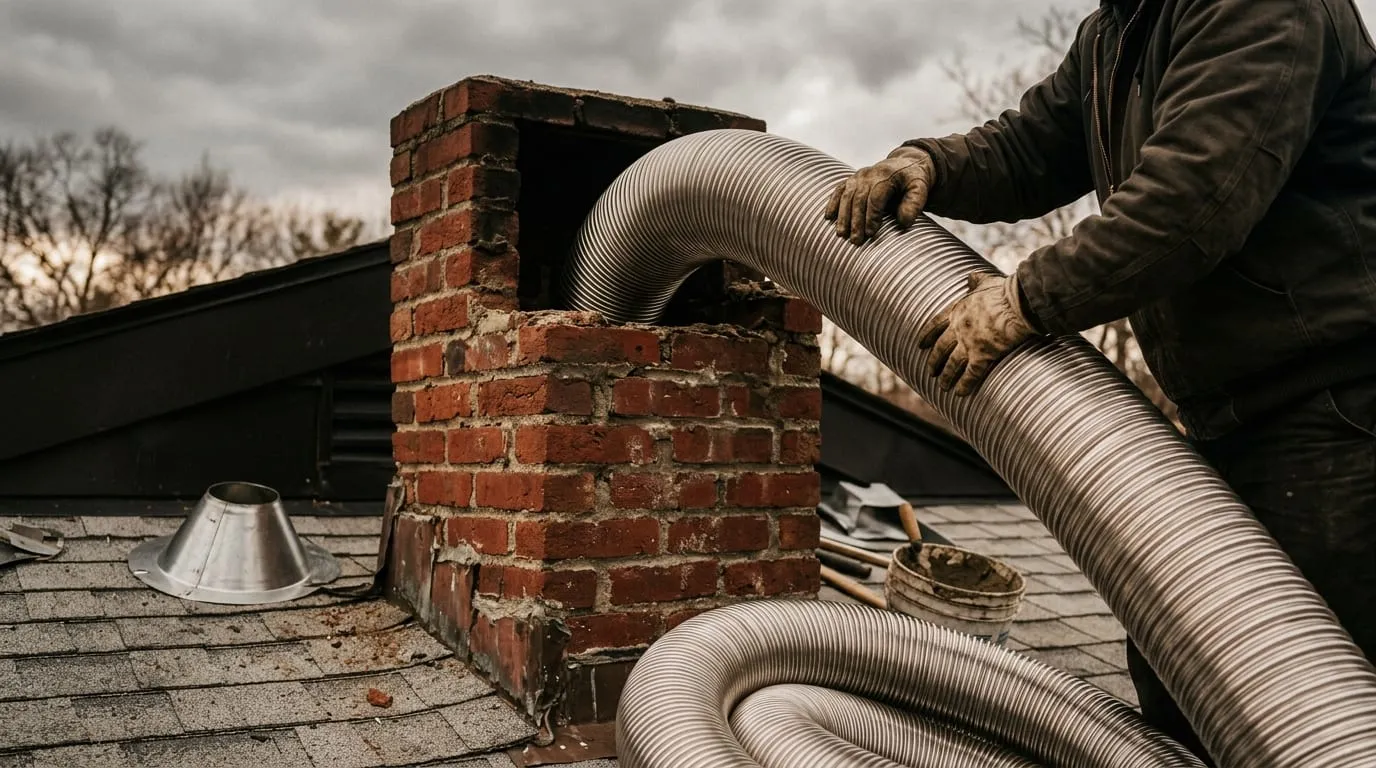
Relining does not shrink the masonry chimney itself — it runs a smooth, correctly sized passage down the inside of it, matched to what the gas appliance actually produces rather than to whatever the original oil setup called for. Confined to a passage close to its own diameter, the exhaust keeps its velocity and its heat long enough to clear the top before it has the chance to condense on the way up. That is also the repair that satisfies New Jersey's own paperwork: whenever a fuel-burning appliance is installed or replaced, the contractor doing the work has to sign the state's chimney verification form, UCC Form F-370, certifying the flue is lined and sized correctly for what is going in — not just cleaned out from what used to be there.
Why This Comes Up More in Hunterdon County Than Elsewhere
Homes closer to the region's gas mains made this switch decades ago, which is part of why an oversized flue is a less frequent finding in the denser counties east of here. Hunterdon is different: Readington's own households on fuel oil or bottled gas add up to roughly one occupied home in four, and Lebanon Township's share of oil heat runs higher still, over half of its households. None of those flues has a utility inspecting them the way a gas main gets checked, so a conversion — or a sweep and camera scan like this one — is often the first real look any of them get.
Questions about oil-to-gas conversions and flue sizing
Does every oil-to-gas conversion need a new chimney liner?
Not automatically, but it should always be checked. A liner sized for the old oil appliance is occasionally close enough to work for the new one, but an unlined or clearly oversized masonry flue almost never is, and the only way to know for certain is to have it looked at as part of the conversion, not sometime after.
Is an oversized flue dangerous, or just a maintenance problem?
It can be both. Beyond the slow damage acidic condensate does to mortar and tile, weak draft in an oversized flue can let combustion gases linger longer than they should, which is a carbon monoxide concern on any fuel-burning appliance, not just an efficiency one.
How would I know if my chimney was originally sized for an oil furnace?
If the masonry predates the appliance now venting into it, or a fuel switch happened at some point with no mention of relining afterward, that is reason enough to ask. A camera run down the flue settles it either way.
Does New Jersey require anything specific when an appliance's fuel changes?
Yes. Whenever a fuel-burning appliance is installed or replaced, the contractor doing the work has to sign the state's chimney verification form certifying the flue is lined and sized for what is going in. That responsibility sits with the installer, not the homeowner.
Converted to gas and not sure about the flue?
A camera run down your flue shows whether it was ever relined for the appliance now using it, and what the masonry looks like after however many winters of exhaust. Call, or request a free estimate, and we will walk through what a scan of your chimney would show.
What usually comes next
Chimney Repair
Relining a flue that is oversized for the appliance now venting into it, sized to what the gas unit actually puts out.
See what's includedChimney Inspection
A camera scan that shows whether a converted flue was ever relined, and what the masonry looks like now.
See what's includedChimney Sweep
Clearing whatever built up in the flue before the conversion, ahead of a liner going in.
See what's included