
What a Hundred Winters of Freeze and Thaw Do to a Hunterdon County Chimney Crown
A concrete chimney crown looks built to last as long as the house underneath it. In Hunterdon County, where the air crosses freezing something like a hundred times a year, it usually does not — and the reason has less to do with how well it was built than with how many winters it has already survived.
The straight answer
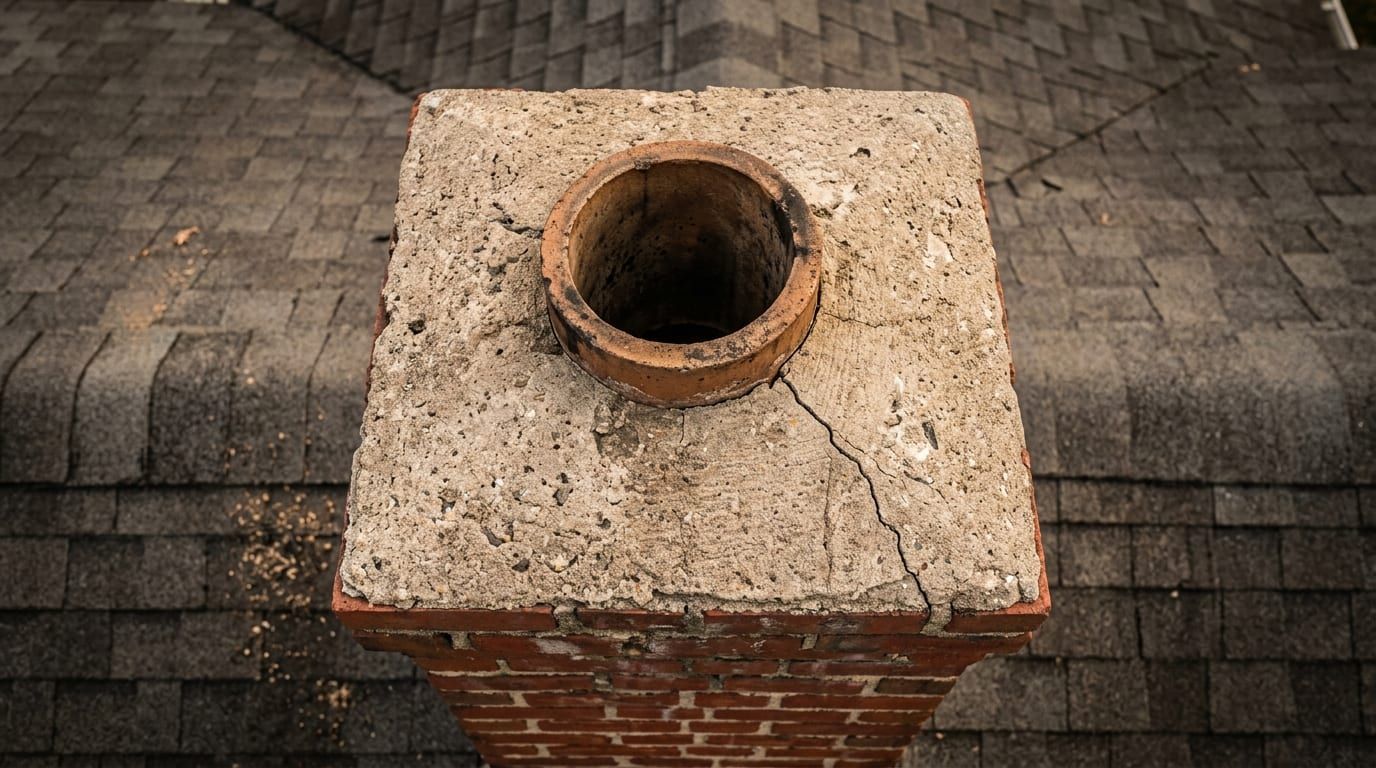
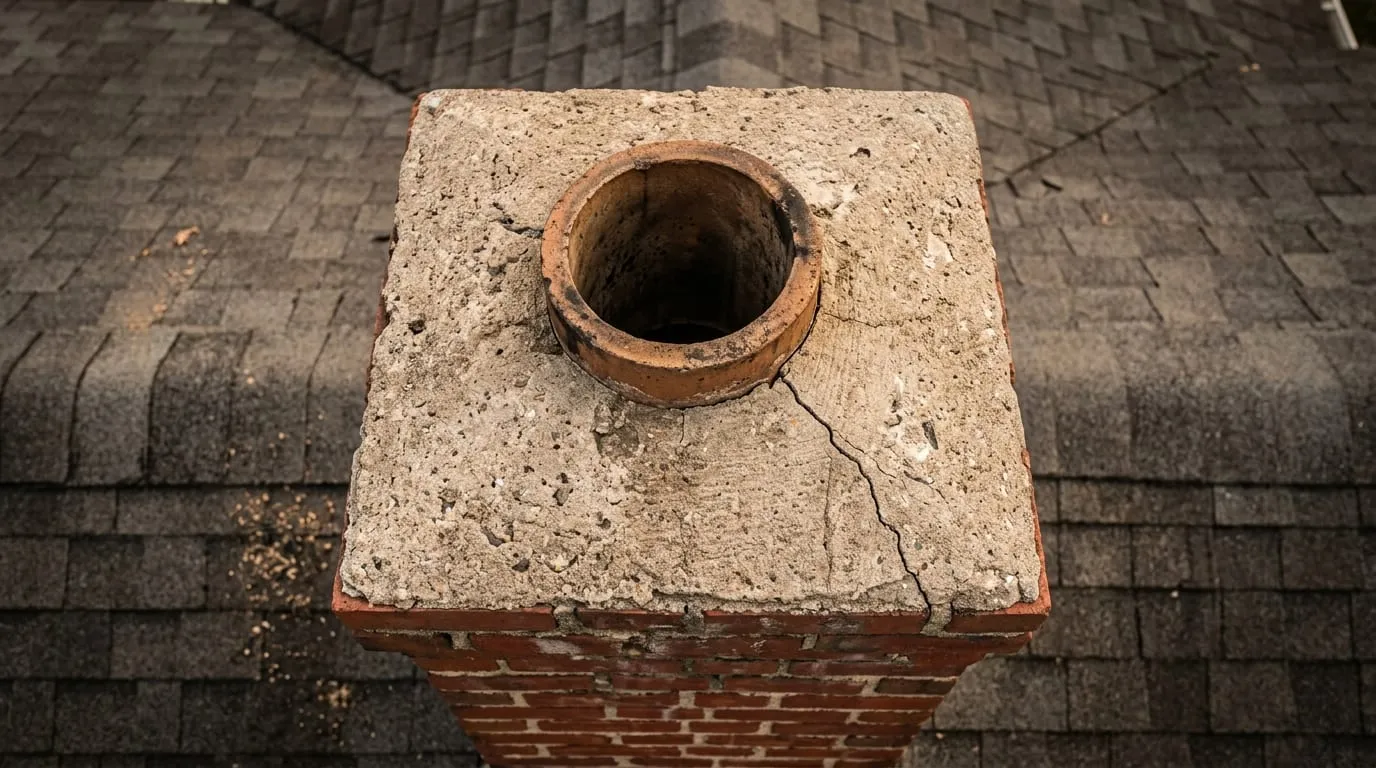
A hundred winters means something like ten thousand separate freeze-thaw cycles pressing on the same slab of concrete sitting on top of your chimney. Each cycle by itself is small: water works into a hairline crack, freezes, expands by roughly nine percent, and leaves the crack a little wider than it found it. In Hunterdon County that cycle runs an estimated 100 to 125 times a year, well above what the same masonry goes through in Newark or Philadelphia, so a crown here does more work, more often, than one on a house thirty miles closer to the coast. It is usually the first thing on the chimney to fail, not because it was built worse than the rest of the stack, but because it is the one surface up there with nothing above it to take the weather first.
How One Hairline Crack Turns Into a Wide One
A crown is supposed to be sloped concrete or mortar poured over the top of the masonry stack so rain runs off it instead of soaking in. The moment a hairline crack opens — from shrinkage while it cured, from a contractor’s boot, from ordinary age — winter turns it into a lever. Water sits in the crack going into a cold night, freezes solid, and ice takes up roughly nine percent more space than the water did a few hours earlier. That expansion has to go somewhere, and the crack is the weakest point in reach, so it widens by a fraction of a millimeter. Above freezing the next afternoon, the ice melts, the water drains back into the same crack it just opened wider, and the crown waits for the next cold night to do it again.
- A crack too small to notice from the ground doing real work by its second winter
- Small chunks of the crown surface breaking away where water has repeatedly frozen just beneath it
- A crack running straight to the flue collar, the shortest path water has into the chimney’s interior
- A crown poured flat instead of sloped, holding water on top instead of shedding it
Caps and Flashing Take the Same Beating, Just Differently
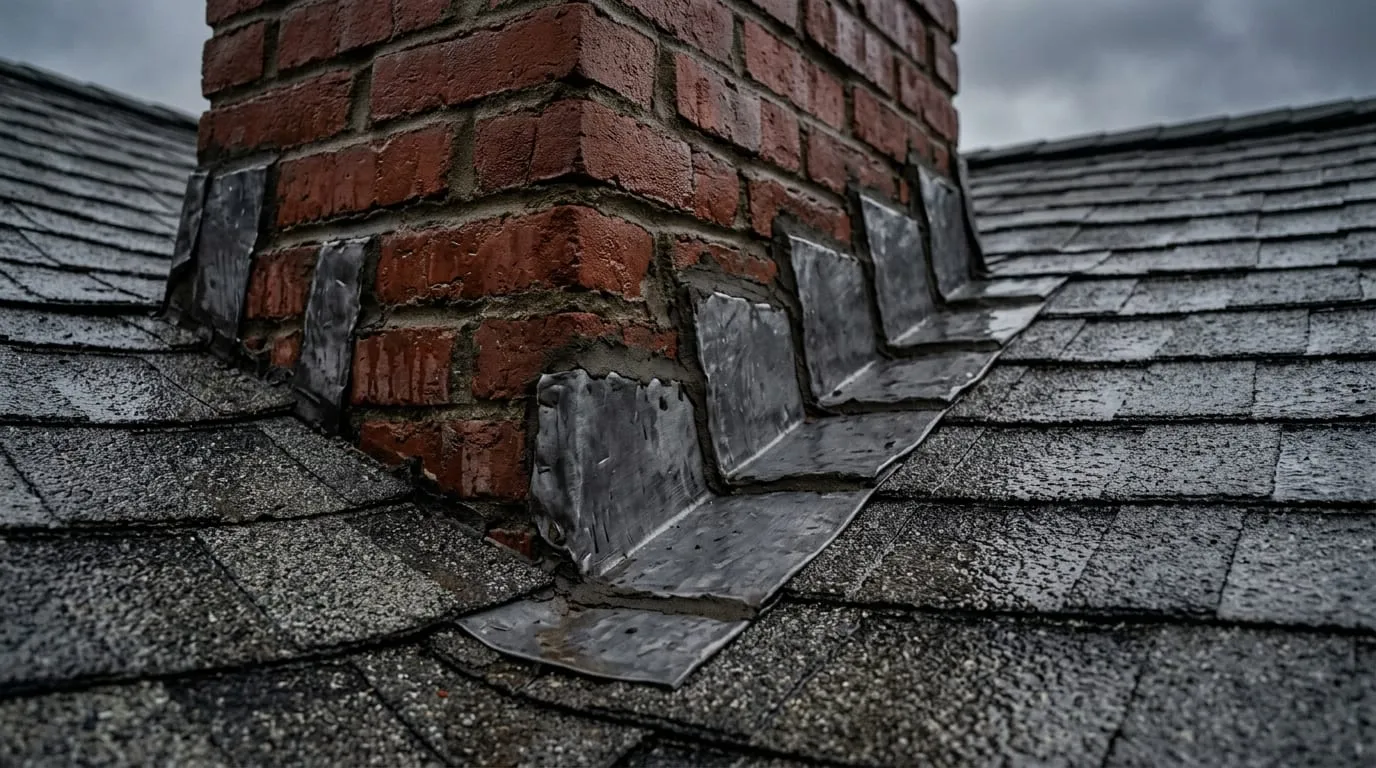
The crown is not the only surface up there fighting the same cycle. A chimney cap’s mesh and metal rust from the inside out where condensation freezes against it overnight and thaws again by mid-morning, and a rusted mesh eventually tears or drops into the flue. The flashing, where the chimney meets the roof deck, is two different materials — masonry and asphalt shingle — expanding and contracting at two different rates every time the temperature swings back through freezing. Winter after winter that mismatch works the sealant loose and lifts the metal at the seam, and the next hard rain finds the gap long before anyone standing on the ground would.
Why This Runs Harder in Hunterdon Than It Does Closer to the Coast
None of this is a guess. NOAA’s 1991–2020 climate normals for the weather station nearest Readington — Flemington 5 NNW, about five miles from the township’s western edge — record roughly 123.8 days a year when the air drops to 32°F or below, and only 20.6 of those days stay at or below freezing from morning to night. Subtract one figure from the other and a Hunterdon County crown goes through an actual freeze-and-thaw, not just a cold snap, on approximately 103 days most years.
- Flemington 5 NNW, in Hunterdon County: about 103 freeze-thaw crossings a year (NOAA 1991–2020 normals)
- Newark Liberty International: about 65 crossings a year over that same thirty-year period
- Philadelphia International: about 64 crossings a year — the two cities most of the county commutes to for work
- Wertsville 4 NE, near East Amwell: roughly 99 crossings a year, confirming the county-wide range
- Higher ground still: Lebanon Township sits near 925 feet against Flemington’s 265, running a longer, colder season on top of the same cycle
When the Crack Finally Reaches the Flue Tile Underneath
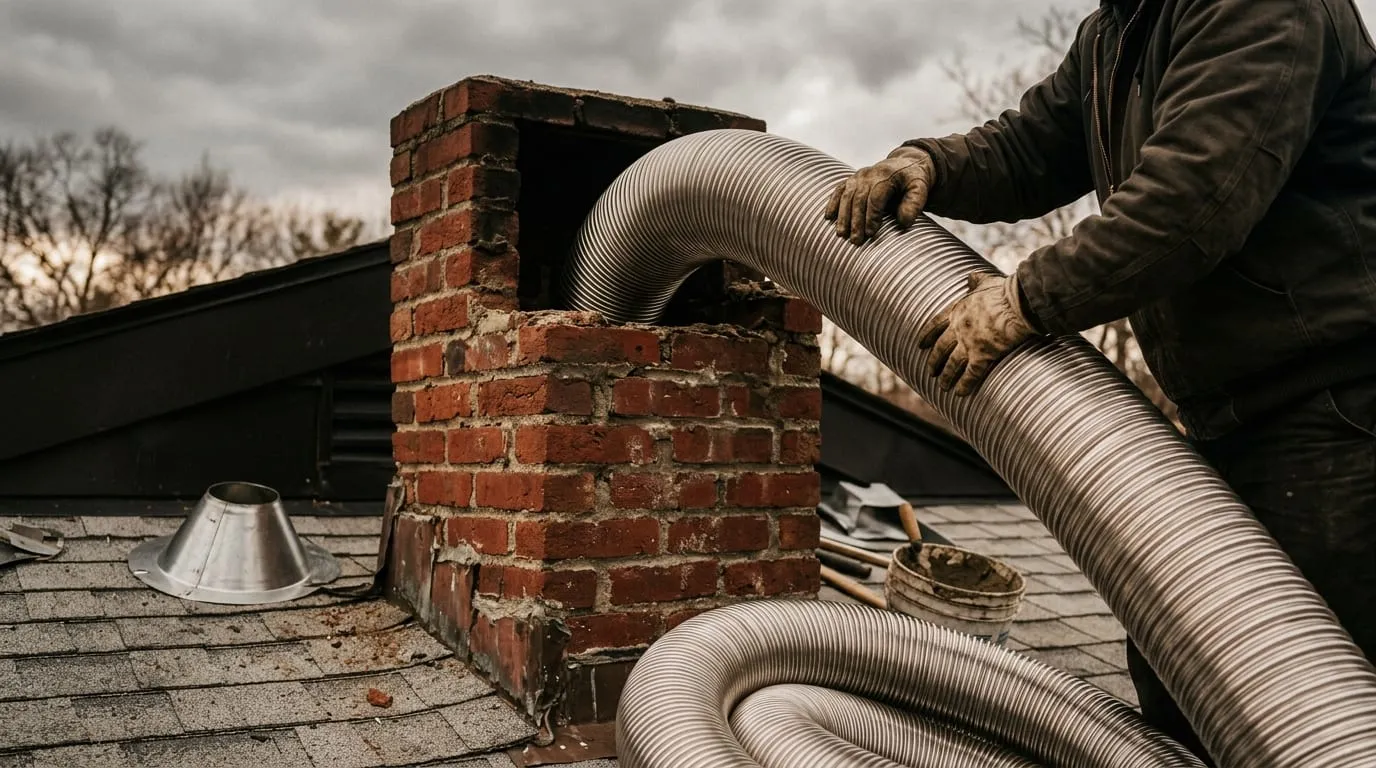
A crown that goes uninspected through enough of these winters eventually stops protecting only itself. The same crack that started as a hairline in the concrete can run down to the flue collar and open a path straight to the clay tile lining the flue underneath — tile that was never meant to sit wet all winter. Clay expands and contracts at its own rate too, slightly different from the concrete crown sitting on top of it, so a flue tile that has taken on water for a season or two often develops its own hairline cracks independent of the one in the crown above it. Once that tile has cracked, sealing the crown alone does not finish the job; the fix becomes a liner repair as well, feeding a new liner down the flue to replace the section the water reached before anyone knew to look for it.
The Fix Is Usually Simple; Waiting Through Another Winter Is the Expensive Part
A cracked crown caught early is typically a resurfacing job, not a rebuild — resealing and reshaping the existing concrete so it sheds water the way it was supposed to from the start. What makes it expensive is leaving it through another freeze-thaw season with the crack still open, since each of those hundred-plus cycles widens it a little further and pushes water a little deeper into the brick and the flue tile below. You can walk past a chimney for years without once looking up at the crown — nobody does, until a stain shows up on the ceiling underneath it. By then the crack has usually had more than one winter to work on it, and the question is no longer whether it gets fixed but how much of the chimney the water reached first. The better time to look is before the county’s next stretch of freezing nights, not after.
Chimney crown questions we hear most
How can I tell if my chimney crown has failed?
Look for a visible crack or a chunk missing from the concrete on top of the stack, a water stain on the ceiling near the chimney after a hard rain, or a chalky white residue running down the brick face below it. Any one of those is worth a closer look before the next freeze.
Is a cracked crown the same problem as a bad chimney cap?
No. The crown is the sloped concrete or mortar slab covering the top of the masonry stack; the cap is the separate mesh-and-metal piece that keeps rain and animals out of the flue opening itself. Either one failing lets water in, but they fail for different reasons and get repaired differently.
Can a cracked crown be repaired, or does it need to be rebuilt?
In most cases it can be resurfaced or resealed without touching the rest of the chimney. A full rebuild becomes necessary once water has been getting in long enough to spall the brick underneath the crown, not before.
Why does Hunterdon County see more freeze-thaw damage than towns near the coast?
NOAA’s climate normals put the weather station nearest Readington at around 103 freeze-thaw crossings a year, against roughly 65 in Newark and 64 in Philadelphia. More crossings means more cycles of a crack filling with water, freezing, and widening — the actual mechanism behind most crown failures here.
Get a Straight Answer About Your Crown Before the Next Freeze
Describe what you’re actually seeing — a visible crack, a stain on the ceiling, a chunk missing from the top of the stack — and we’ll tell you honestly whether it’s a resurfacing job or something bigger, before the next cold snap makes that decision for you.
More on Chimney Care
The Three Stages of Creosote
What creosote actually is, how it hardens in stages, and which stage means it’s time to call.
Read the articleLevel 1 vs. Level 2: Which Inspection Do You Need?
The difference between a routine check and the camera-assisted inspection a sale or a fuel change actually requires.
Read the articleWhich Flue Is Yours in a Two-Family?
Why a shared stack with more than one flue is worth sorting out before anyone lights a fire.
Read the article