
Why a Dryer Vent Takes Two Cycles to Dry One Load
If a load that used to finish in one cycle now needs two, or the laundry room turns warm and damp before the timer goes off, the duct behind the dryer has likely narrowed with lint. Here is what to look for, and why a long basement run with a few bends fills first.
The short answer
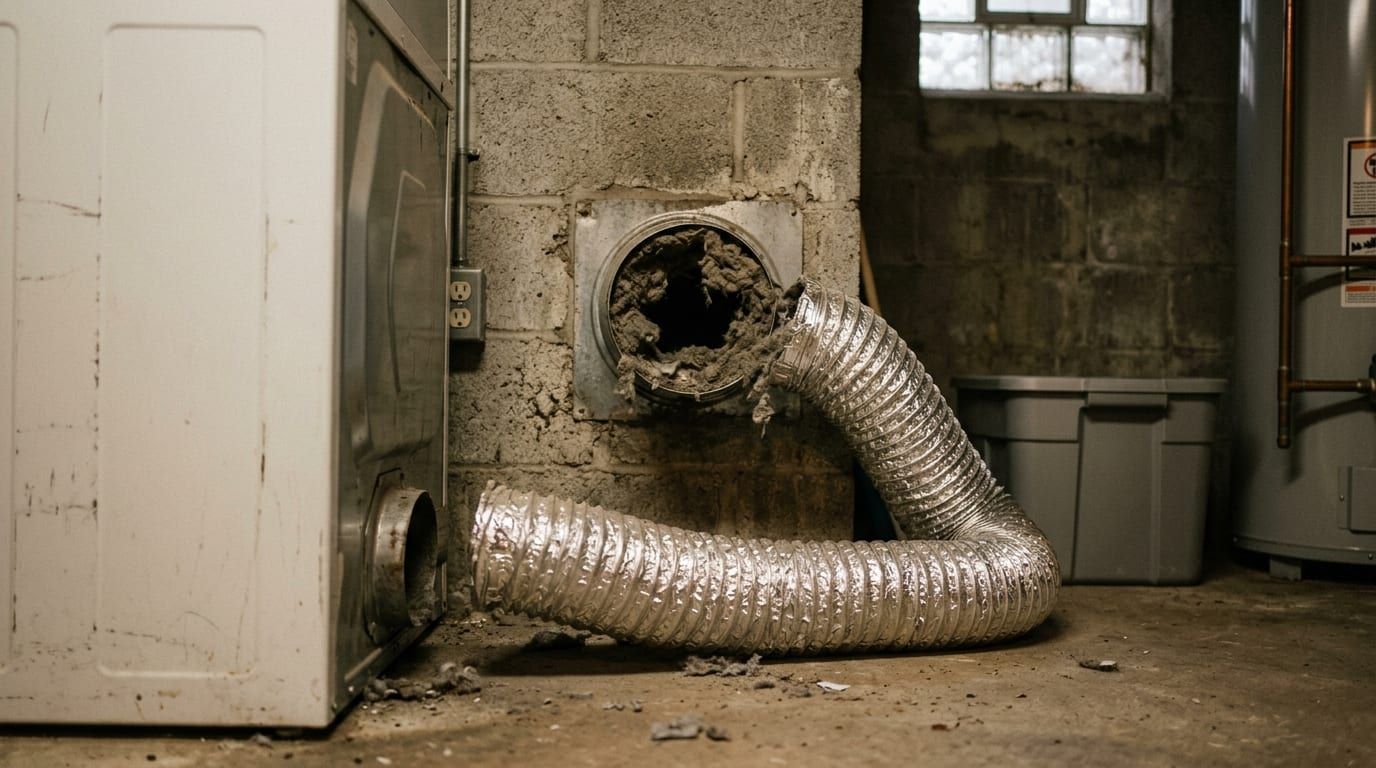
The clearest sign is time: a load that once finished drying in a single cycle now needs two, because lint has narrowed the duct enough to slow the air moving through it. The next sign shows up in the room itself — the laundry area turns warm and noticeably humid partway through a cycle, since the heat and moisture the dryer is built to push outside has nowhere to go but back in. Outside, lint gathering around the exterior cap, or a flap that no longer swings shut on its own once the dryer stops, is often the first sign anyone actually notices. All three show up soonest on a long basement run with more than one bend, because every rise and every turn gives lint a place to settle before it reaches the outside.
When One Cycle Turns Into Two
A dryer’s heating element is rarely the real problem when drying time creeps up — the moving air is. Every dryer is built to push a set volume of hot, moist air out through the duct each minute, and it keeps running as long as its internal sensor still reads damp fabric. Lint sitting along the duct walls narrows that passage gradually, and worse at every bend it passes. Once enough air stops moving, the machine can no longer exhaust moisture fast enough to finish in the time it is built for, so it defaults to a second cycle instead of shutting off.
- A load that used to finish in 40 minutes now needs 70 or more
- Clothes come out of the dryer hotter than they used to
- The moisture-sensor cycle keeps re-triggering instead of ending
A Laundry Room That Turns Warm and Damp
A dryer is built as a closed loop with one open end: heat and moisture go in, and they are meant to leave through the duct, not the room. When that duct is restricted, the air the dryer is still pushing has to go somewhere, and the path of least resistance is back around the door seal into the space around the machine. That is why a blocked vent so often shows up as a laundry room that turns warm and faintly damp partway through a cycle, well before anyone thinks to look at the duct itself. In a small, enclosed laundry closet — common in additions and basement corners across Readington and the surrounding townships — that heat has almost nowhere else to go.
Why a Long Basement Run With Bends Fills First
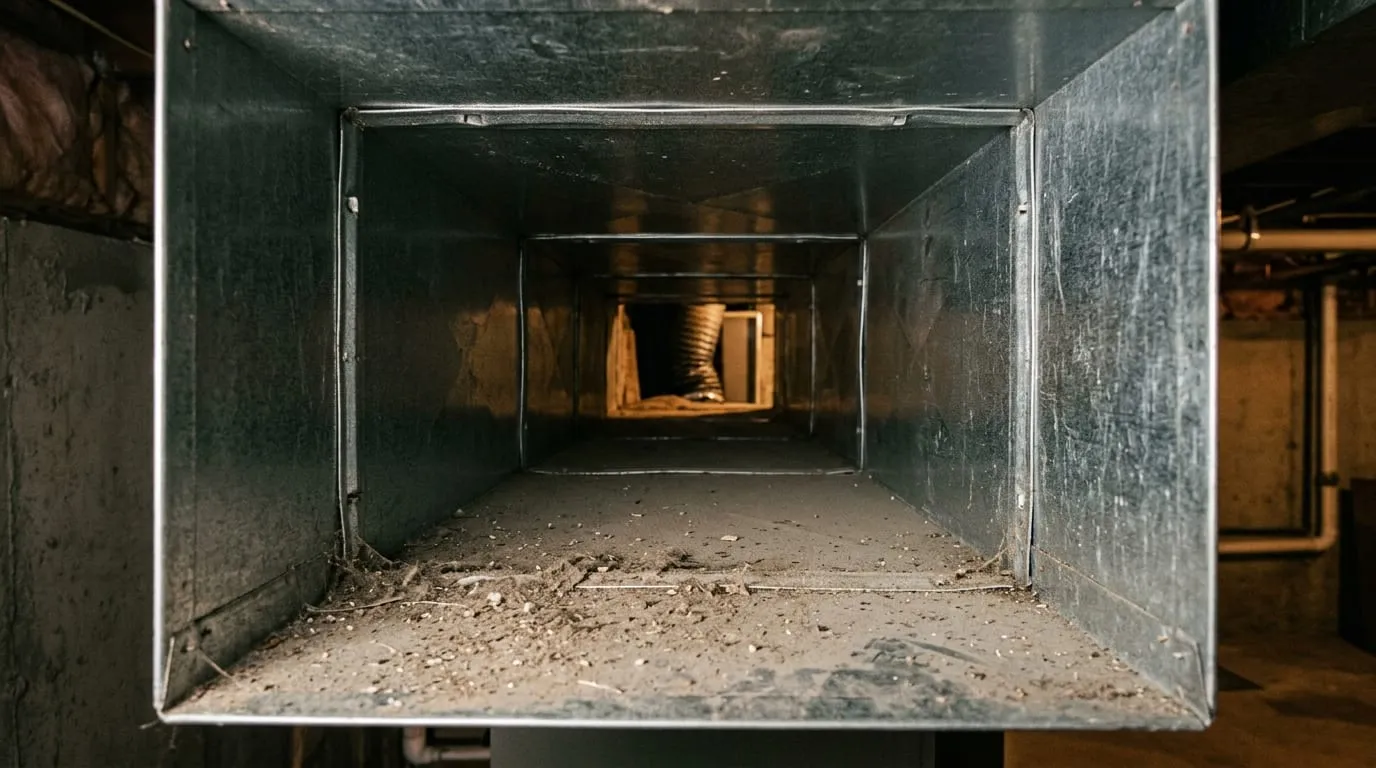
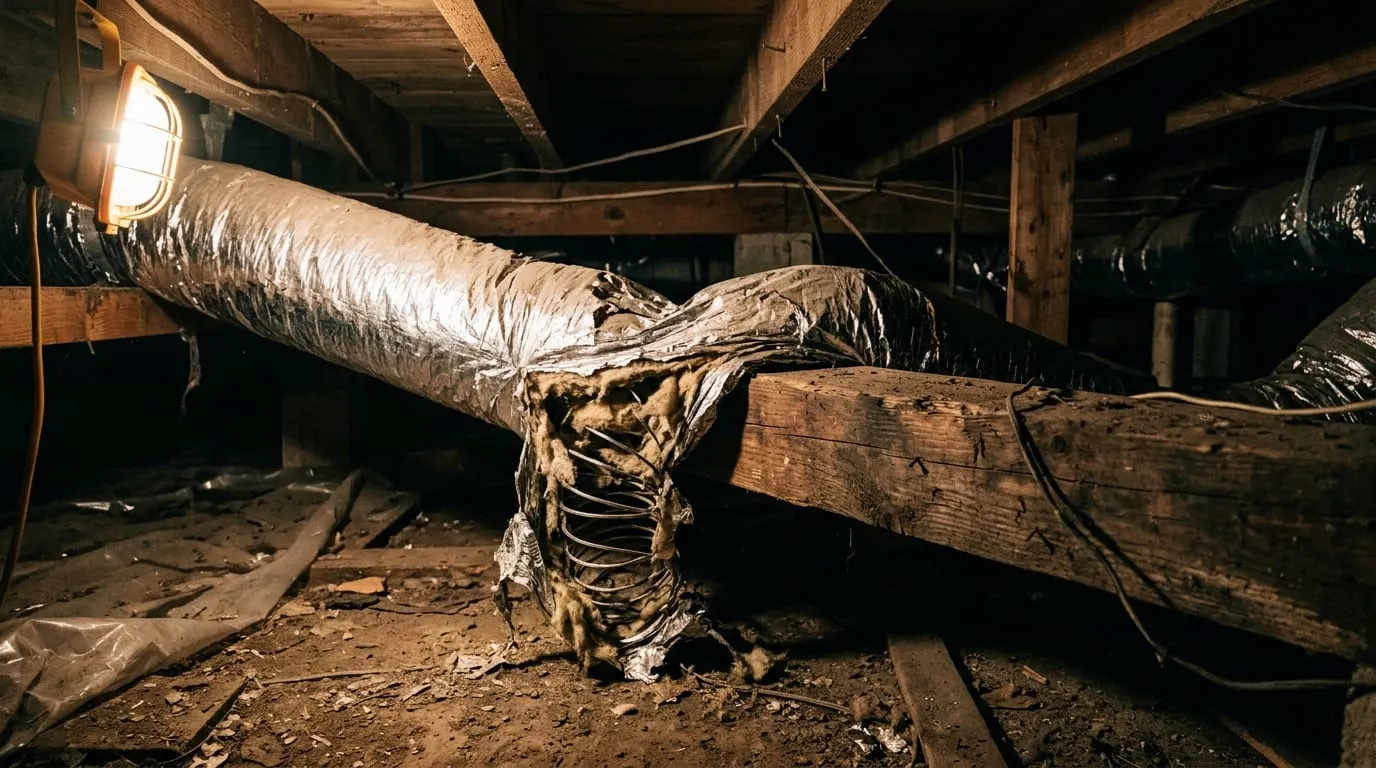
Lint does not travel evenly through a duct — it settles wherever the airflow slows down, and airflow slows at every turn and every rise. A short, straight run from the machine to an exterior wall gives lint almost nowhere to stop. A basement laundry is the opposite case: the duct has to climb from the machine up to an exterior wall or the header above, and each 90-degree turn along the way acts like a speed bump, dropping lint out of the airflow onto the inside of the pipe. New Jersey’s code puts a number on exactly this problem: a dryer exhaust run is capped at 35 feet of equivalent length, and each 90-degree elbow subtracts five feet from that allowance — which is precisely why an elbow, not a straight stretch of pipe, is usually where a long run actually fails.
- Basement laundry rooms mean the duct has to climb before it can vent outside
- Each 90-degree turn quietly eats into the 35-foot allowance
- A run that has never been measured could already be over that limit
The Cap Outside Tells the Truth
The exterior hood is the one part of the system most people never look at, mounted above head height on an outside wall and easy to forget entirely. Its flap is meant to open only while the dryer pushes air through it, then drop shut the moment the cycle ends, sealing the house against the outside air. Lint caught in that hinge, or a flap that no longer seats flush, is a visible sign the line is already restricted enough to leave residue behind on its way out. A gap left open even slightly is also how birds and insects find their way into a duct that was never meant to hold anything at all.
- The flap should swing open only while the dryer is actually running
- Lint visible around the opening means some is already escaping the duct
- A flap propped open or missing lets weather and pests into the line
What the Signs Add Up To
None of these signs on its own proves a duct is fully blocked — a slightly longer cycle now and then is normal, and laundry rooms run warm sometimes regardless. What matters is the pattern: a cycle time that has crept up over weeks or months, a room that stays warm and humid well past when the dryer should be finishing, and a cap outside that is visibly collecting lint instead of just venting it through. Together, especially on a basement run with more than one bend, they describe a duct that has been narrowing for a while rather than a problem that appeared overnight.
Questions about a blocked dryer vent
How long does it take for a dryer vent to actually get blocked?
There’s no fixed timeline — it depends on the length of the run and how many bends it has. A short, straight duct to an exterior wall can go a long time between cleanings; a basement run with two or three turns narrows faster because lint has more places to settle along the way.
Is a blocked dryer vent dangerous, or just inconvenient?
A restricted vent means the dryer is working harder and running longer than it should to finish a load, and lint is a dry, fibrous material sitting close to a heating element inside a duct that was never designed to hold it. Beyond the extra time and energy, that combination is exactly why the duct is meant to stay clear rather than gradually fill.
Can I tell if my vent is blocked without opening it up?
The signs in this article — a longer drying time, a warm or humid laundry room, and lint building at the exterior cap — are the visible clues. Checking airflow at the outside hood while the dryer runs is the more direct test, and it’s part of what gets confirmed during a cleaning visit.
Does clearing a blocked dryer vent need a permit?
No. Clearing or replacing a section of duct counts as ordinary maintenance under New Jersey’s code, the same as most venting repairs. A permit only comes into play if the dryer itself is swapped for one needing a different fuel, a different vent pipe size, a new spot, or new wiring — the duct is a separate matter.
Not Sure If Your Vent Needs Clearing?
Two cycles instead of one, a warm laundry room, lint building at the cap — if that sounds familiar, we clear the full run from the machine to the outside hood throughout Readington Township and our New Jersey service area.
More on Air Duct and Dryer Vent Service
Dryer Vent Cleaning
The full run cleared from the machine to the outside hood, worked from both ends with suction so lint comes out rather than gets pushed further down the line.
See this serviceAir Duct Cleaning
Whether cleaning the ducts themselves is worth doing depends on the system, not on how long it’s been since anyone asked.
See this service