
When Air Duct Cleaning Is Actually Worth the Money
We clean air ducts for a living, which is exactly why we can tell you that most houses calling about it don't need it. Here are the specific cases where the work does something, and what to spend the money on instead when yours isn't one of them.
Duct cleaning, the short version
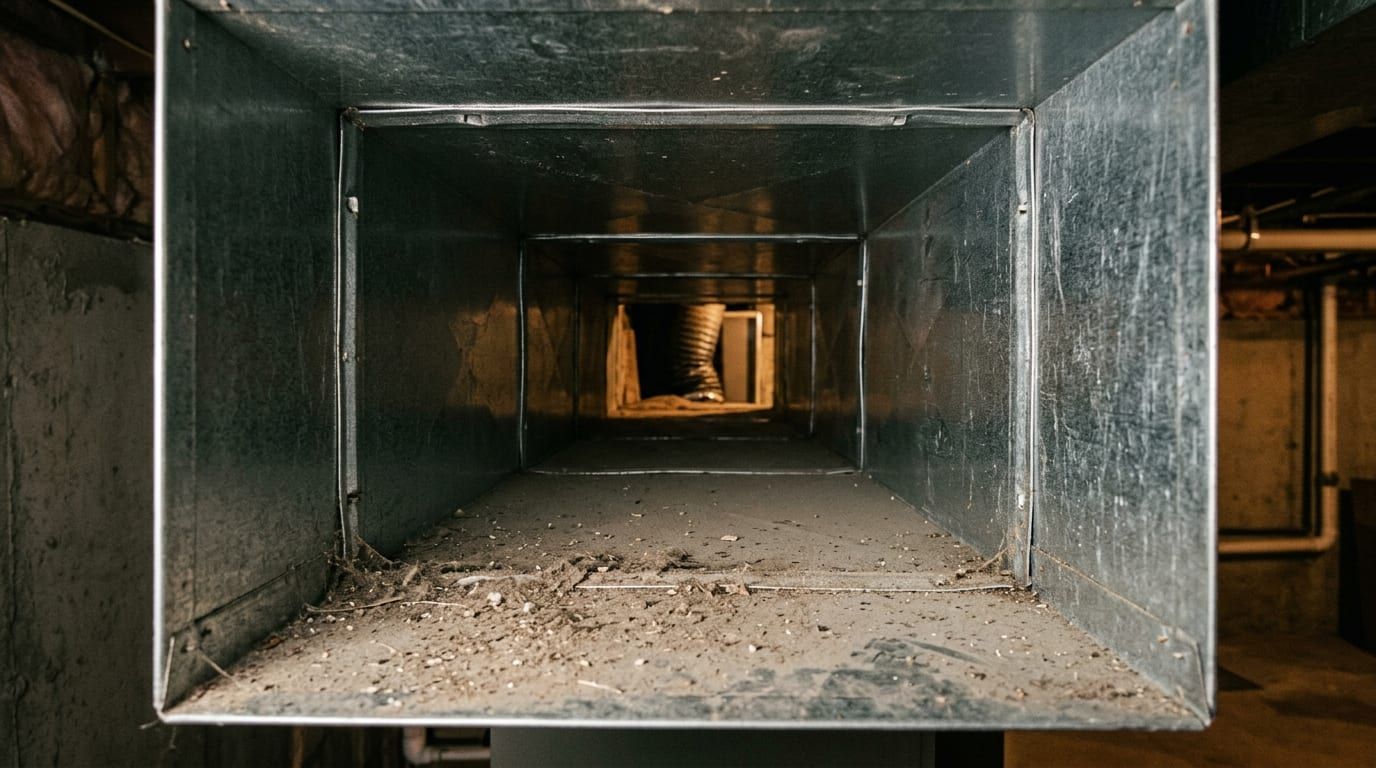
Air duct cleaning is worth paying for in a small set of specific situations, not as routine upkeep. It earns its cost after a renovation or construction job ran while the system was operating, because plaster and sawdust get pulled into the ductwork and keep drifting back out of the registers for months afterward. It earns its cost where mice, squirrels, or insects have gotten into a duct run and left droppings or nesting material behind, and it earns its cost after a flood or a long stretch of standing damp, or when a house changes hands from an owner who smoked heavily indoors. Outside of those, no health agency has shown that cleaning an ordinary residential duct system changes the air a family breathes — most household dust comes from people, pets, and cooking, not from the metal behind the walls. And if your house is heated by radiators or baseboard rather than a blower and ductwork, none of this applies to you in the first place.
The Cases Where Cleaning Actually Does Something
Renovation dust is the easiest of the five to prove: a system that kept running while a kitchen was gutted or a floor sanded pulls plaster and wood dust into every branch, and it keeps drifting back out of the registers for months after the crew leaves. Rodents and insects are the second case, and a duct run through an unfinished crawlspace or an unconditioned attic is the setup that invites them in. That describes a great deal of ductwork in Hunterdon County's largest township, Raritan, where 61 percent of the housing dates to 1980 or later — the era when a crawlspace-run duct system became the standard way to heat and cool a new subdivision house. What a mouse or squirrel leaves behind in that kind of run does not clear on its own. A flood or a long damp spell is the third, heavy indoor smoke residue from a previous owner is the fourth, and the fifth is the plainest: debris you can watch fall out of a register yourself.
- Construction or renovation dust pulled into the system while work was underway
- Rodents, insects, or nesting material found inside a duct run
- A flood, or ductwork that sat damp for an extended stretch
- Moving into a house from an owner who smoked heavily indoors
- Visible debris you can watch fall out of a register
What Health Guidance Actually Supports
Public health guidance on this point is consistent, and it is not the pitch most homeowners hear at the door: there is no solid evidence that cleaning an ordinary home's air ducts prevents illness or measurably lowers the dust in the house. Most of what settles on a windowsill comes from the people, pets, and cooking inside a house, and from outdoor air pulled in through doors and windows opening and closing — not from the sheet metal running behind the walls. What guidance does support is narrower: cleaning where mold is visibly growing inside the system, where the ducts are infested, or where they are clogged enough that debris is actually being released into the rooms. That is a much shorter list than most doorstep offers imply, and it is the one we work from when we tell a customer their system does not need the service.
What a Proper Cleaning Actually Looks Like
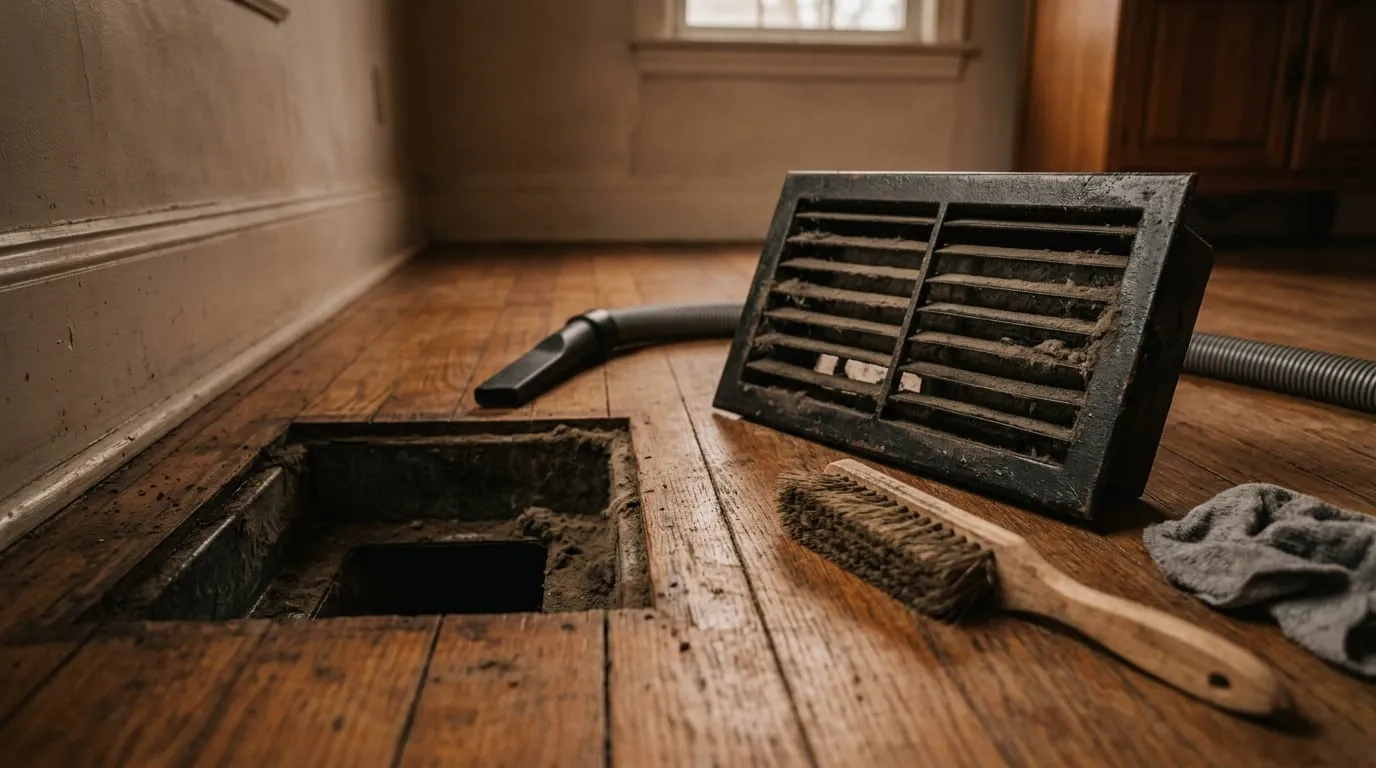
Ask two questions before booking anyone: where does the suction connect, and does the crew touch the return side at all? A thorough job pulls from the main trunk with a portable vacuum unit and then works each branch and register in turn, so loosened dust travels toward the machine instead of settling one room over. The return grilles carry more household dust than the supply side, simply because that is the air pulled back in from the rooms, so skipping them skips the dirtiest part of the system. Every register and its metal boot should come out of the wall or floor and get cleaned on a bench, not wiped with a rag while still mounted.
- Negative pressure on the main trunk, with every branch actively agitated
- The return side worked as hard as the supply side, not skipped
- Registers and boots removed and cleaned separately, not vacuumed in place
The Repair That Usually Matters More Than the Cleaning
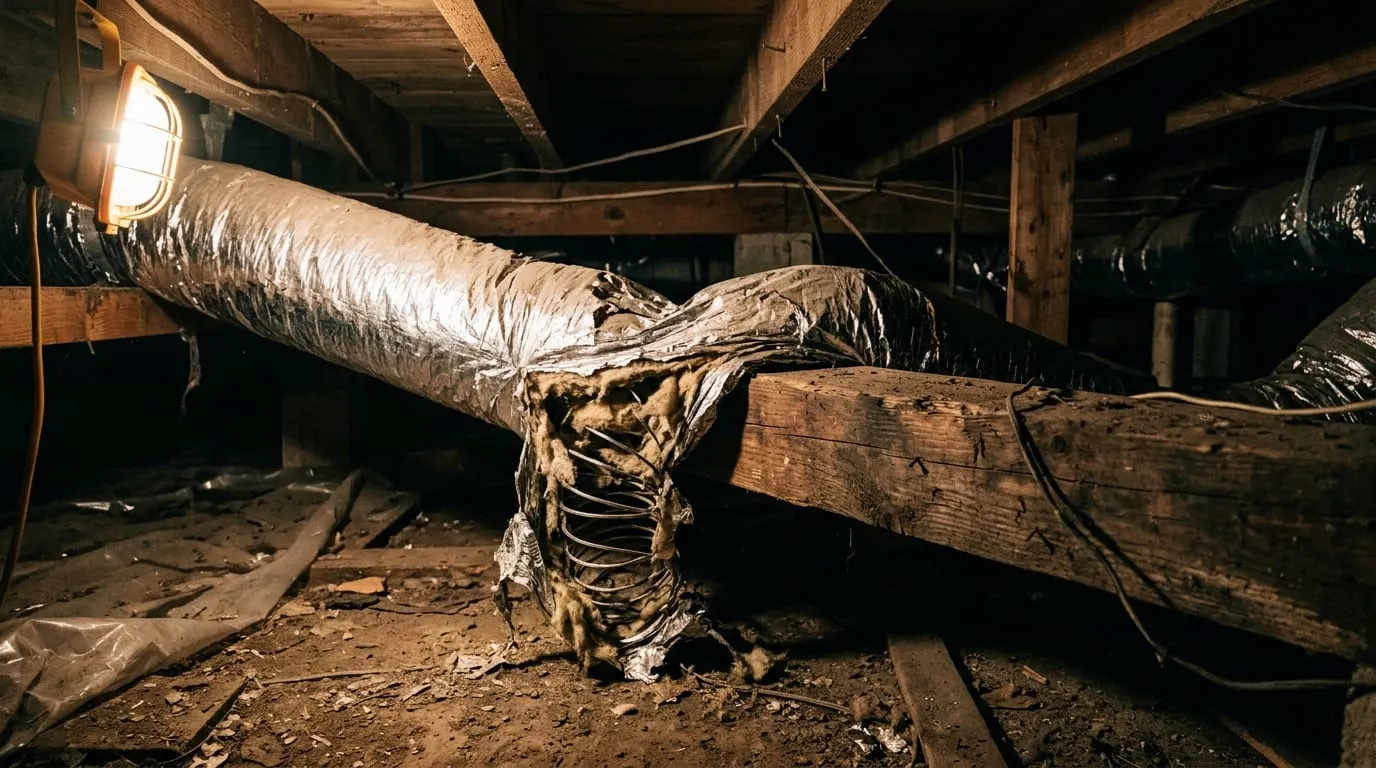
In an older house where forced air was added later, the costlier problem is almost always a leaking joint rather than dust: cloth duct tape dries out and lets go over the years, and a seam that was never sealed properly bleeds conditioned air into a crawlspace or attic every hour the system runs. That shows up as a heating bill, not a visible mess, which is exactly why it can go unfixed for years while the dust gets the attention instead. A run a camera actually finds crushed flat over a joist, or torn open at a seam, is worth repairing on the spot: duct repair and replacement is classed as ordinary maintenance under New Jersey's own construction code, so fixing what the camera shows does not wait on a permit. Sealing and repairing the ductwork comes before cleaning it, since air pulled in through an open seam undoes a good part of whatever cleaning just happened.
How to Get a Straight Answer About Your Own Ducts
Before you agree to anything, ask for a picture: have the technician pull a register, drop a phone camera or an inspection scope a few feet into the trunk, and show you what is actually inside your own ductwork before naming a price. A dusty duct looks dusty on a screen and a clean one looks clean, so this single request removes most of the guesswork from the conversation. If what gets shown to you is a stock photo, or someone else's ductwork from a different job, that tells you the estimate is not based on your house at all. On plenty of visits the honest finding is that nothing needs doing, and we would rather say so on the spot than invent work to justify showing up.
Questions About Air Duct Cleaning
Will cleaning my air ducts help with allergies?
For most households, no measurable improvement should be expected, and we would rather say that up front than take the job anyway. The exception is a house matching one of the five cases above — a recent renovation, an infestation, water damage, or heavy smoke residue from a previous owner. Otherwise, a better filter changed on schedule tends to do more for the room's air.
How often should air ducts be cleaned?
We don't quote a number of years, because the honest answer isn't a calendar interval — it's tied to whether one of the five triggering situations has actually happened to the house. No renovation, no pest problem, no flood, no heavy smoker moving out, and there may be nothing to clean for the life of the system.
A company offered whole-house duct cleaning for a very low price. Is that a real deal?
Be skeptical. Cleaning an entire home's ductwork correctly, trunk, every branch, and the return side, is close to a full day's labor for a two-person crew, not an hour. Ask exactly what equipment is coming and whether the return grilles are part of the work.
Should I get the dryer vent cleaned at the same time?
If you're only paying for one of the two, make it the dryer vent. It runs through a separate duct built for a different appliance, and lint packed into that duct is a genuine fire-safety concern in a way that ordinary dust in a supply or return run simply is not.
Not Sure Which Case You're In?
Tell us what you're actually seeing, and we'll tell you honestly whether it's one of the five reasons above or not. We answer the phone from 7:00 AM to 9:00 PM, Every day.
The Services This Article Points To
Air Duct Cleaning
Ducts are worth cleaning in a handful of specific situations and sold for everything else. This page is about telling those apart before you book anything.
See this serviceDuct Repair & Replacement
One stubborn room is almost never a thermostat problem. It's far more often a flex run pinched over a joist, disconnected at a takeoff, or slowly emptying warm air into the crawlspace instead of the vent.
See this service